
Spinal Decompression: What It Is & Who It Helps
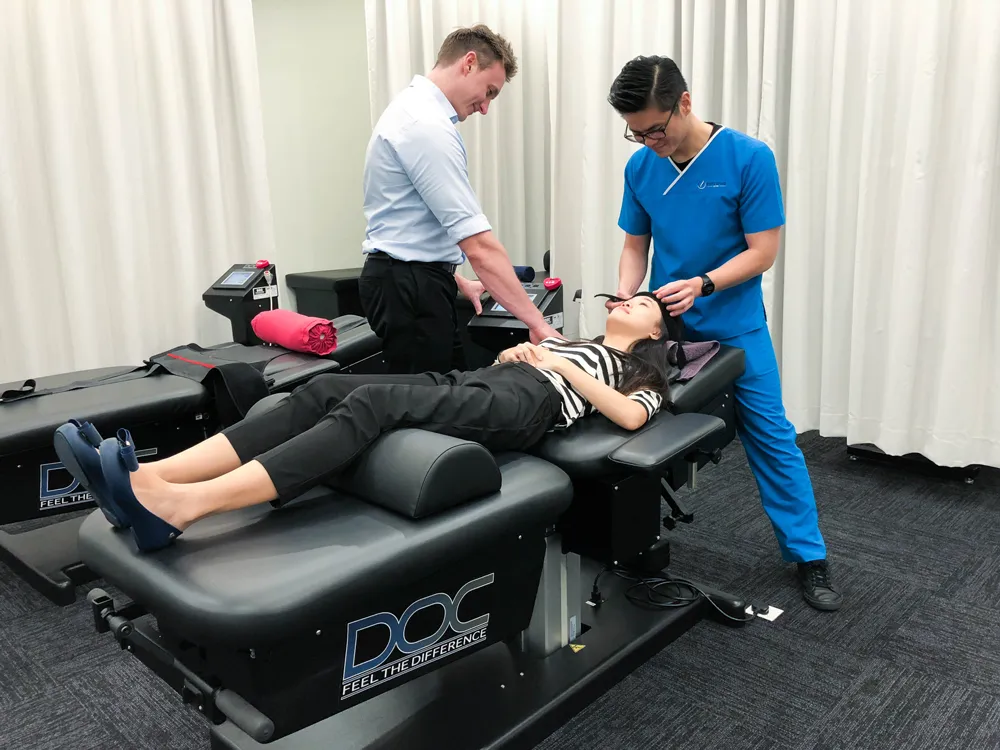
Spinal decompression is a non-invasive traction therapy that gently stretches the spine to relieve pressure on discs, nerves and surrounding tissues. It is commonly used to treat conditions like herniated discs, sciatica and spinal stenosis, with most patients completing 10 to 12 sessions to achieve long-lasting relief.
- Spinal decompression is a computer-controlled traction therapy that gently stretches the spine to relieve disc and nerve pressure.
- It is most effective for herniated discs, sciatica, spinal stenosis and related nerve conditions.
- Each session lasts around 15 to 20 minutes, with most patients completing 10 to 12 sessions in total.
- The treatment is non-invasive, requires no anaesthesia and has no recovery downtime.
- It is a well-tolerated option for those seeking relief between conservative care and surgery.
If you are struggling with back pain and have not found lasting relief through painkillers or rest, you are not alone. Many people in Singapore reach this point and start looking for something more targeted. Spinal decompression is one option worth understanding, and this guide covers everything you need to know about what it is, who it can help, and what to expect from treatment.
What Is Spinal Decompression?
Spinal decompression is a type of traction therapy that works to relieve pressure on the spinal column, and in particular the intervertebral discs. Using a computer-controlled table, the spine is gently and gradually stretched with a cyclical mechanism, creating space between the vertebrae.
This process reduces compression on the discs and nerves, and encourages increased blood flow, nutrients and fluids back into the affected area to support the body’s natural healing process. At the same time, tension in the surrounding muscles, ligaments and tendons is reduced, which can ease pain and improve overall comfort and movement.

Who Can Benefit From Spinal Decompression?
Spinal decompression has been used effectively to manage both acute and chronic back pain. It is particularly well-suited to conditions involving the spinal discs and nerves, including:
- Herniated, bulging or degenerative discs
- Pinched nerves
- Sciatica
- Spinal stenosis
- Osteoarthritis
- Spondylolisthesis
Whether your back pain has come on suddenly or has been building over months or years, it is worth speaking to a professional to find out whether spinal decompression could be a suitable part of your treatment plan.
How Does Spinal Decompression Work?
Treatment is delivered using a computer-controlled table. You will lie down comfortably while the machine applies a carefully calibrated stretch to the spine. In the first session, the intensity is minimal to allow the body to adjust. Over the course of treatment, this is gradually increased to optimise results.
Each session typically lasts up to around 15 to 20 minutes. Most patients require between 10 and 12 sessions in total, though this varies depending on the condition being treated and how the body responds. Your clinician can target specific segments of the spine for a more focused approach, helping to reduce pressure and inflammation in the areas that need it most.
What Are the Benefits of Spinal Decompression?
Many patients choose spinal decompression as an alternative or complement to other treatments because of the range of benefits it can offer:
- Reduced pain and nerve compression
- Improved circulation to spinal structures
- Increased flexibility and range of motion
- Better posture and spinal alignment
- Less reliance on pain medication
- Long-lasting results without surgery
Because it is non-invasive and requires no anaesthesia or recovery downtime, most patients can return to their normal daily activities straight after each session. For those who want to explore options between conservative care and surgery, spinal decompression offers a well-tolerated middle ground. It can also be used alongside other therapies such as chiropractic care or rehabilitation therapy as part of a broader treatment plan.
For an evidence-based overview of traction-based therapies and their applications, the National Institutes of Health (NIH) library provides peer-reviewed research on spinal traction for low back pain and disc conditions.
Speak to the Team at Elite Spine Centres
If back pain is affecting your quality of life, the team at Elite Spine Centres can help you understand your options. Our specialists will carry out a thorough assessment and put together a personalised treatment plan designed around your condition and goals.
Give us a call on +65 6904 8400 or WhatsApp us on +65 9727 3603 to book a consultation.
Frequently Asked Questions
Is spinal decompression safe?
Spinal decompression is generally a safe treatment for a wide range of back conditions, including degenerative disc disease, sciatica and spinal stenosis. It is performed using a controlled, computer-guided machine that allows your clinician to manage the level of stretch precisely. That said, it is not suitable for everyone. People who are pregnant, have spinal fractures, metal implants or certain other conditions may not be candidates. A thorough assessment will always be carried out before treatment begins to confirm it is appropriate for you.
How many sessions will I need?
The number of sessions depends on your specific condition and how your body responds to treatment. Most patients complete between 10 and 12 sessions, though some may see results sooner and others with more complex or chronic conditions may benefit from a longer course. Your clinician will provide a clear treatment plan after your initial assessment and will review your progress along the way.
Is spinal decompression painful?
Most patients find it comfortable, or even relaxing. You may feel a gentle stretching sensation during the session, but the treatment should not cause pain. If you experience any discomfort, your clinician can adjust the settings straight away.
What should I avoid after a session?
There is generally no downtime after spinal decompression. Most people return to normal activities immediately. It is advisable, however, to avoid heavy lifting, intense physical exertion and excessive twisting in the hours following treatment to give your spine time to settle.
How soon will I notice results?
Some patients notice a reduction in pain or improved ease of movement within the first few sessions. More significant and lasting improvement typically develops over the full course of treatment. Everyone responds differently, and your clinician will monitor your progress and adjust the plan as needed.
Related treatment at Elite Spine Centres: Spinal decompression therapy.
Speak to a clinician about what is causing your pain.
Your first visit is a 60-minute session with a doctor — a full assessment and your first treatment in the same appointment. We take your clinical history, screen your posture and movement, explain what we find in plain language, and begin treatment if your condition is suitable for our care.