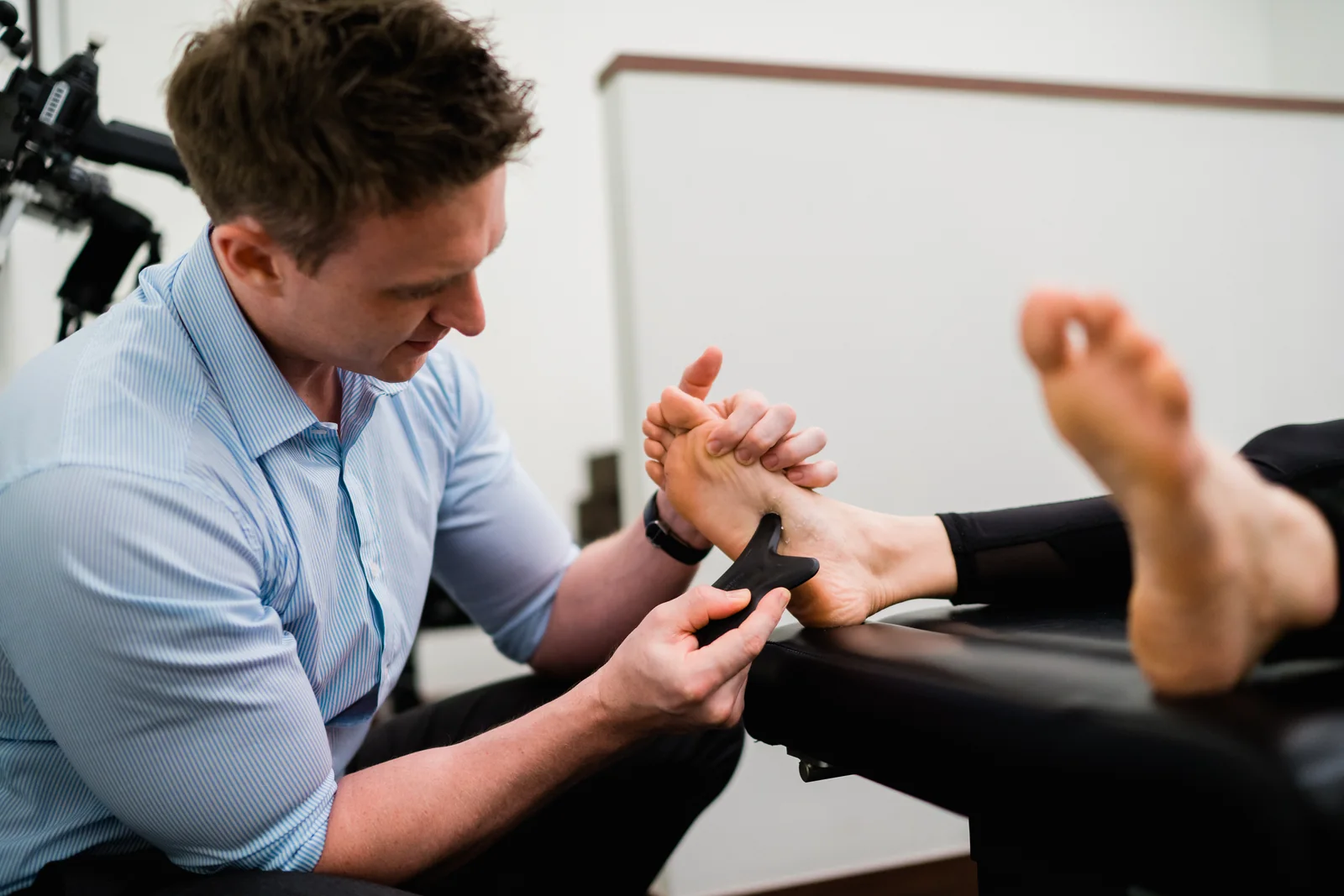
What causes foot pain
Most adult foot pain has a mechanical cause — plantar fasciitis, heel-spur syndrome, Achilles tendinopathy, or pain referred from the lower limb. Foot mechanics also influence the entire kinetic chain, meaning unresolved foot dysfunction can drive knee, hip, and back symptoms.
Many people treat foot pain as a normal part of life and assume it is something to live with. It usually is not.
The structure of the foot and ankle, and what goes wrong
The feet and ankles are complex structures: joints, muscles, tendons, ligaments, bones, blood vessels, nerves and skin, all working together. That complexity is also why they are prone to injury from everyday activity and from a range of other factors.
The causes we see most often are:
- Loss of one or more of the arches of the foot
- Improper or non-supportive footwear
- Sports and athletic injuries
- Sprain or strain of the muscles, tendons or ligaments
- Degenerative change with age
Most of these respond to a combination of manual treatment, supporting therapies, rehabilitation exercise and, where it helps, advice on footwear and over-the-counter orthotic support.
Arch pain and the common problem areas
Pain at the bottom of the foot
The conditions that most often affect the sole of the foot are heel spurs, metatarsalgia (pain at the ball of the foot), tarsal tunnel syndrome (pain or numbness through the arch or sole) and plantar fasciitis.
Pain at the sides of the foot
Pain can also appear on the inside or outside of the foot, or at the ankle. Often it is the result of mechanical stress or poor mechanics in one or more of the 26 bones and 33 joints of the foot. Runners and generally active people complain of this most. Common causes include bunions, flat feet, tendonitis, tailor's bunion and ankle sprains.
Pain at the back of the foot
Achilles tendonitis is the most common condition at the back of the foot. It develops from repeated stress and strain on the Achilles tendon, and in most cases there is a mechanical dysfunction or misalignment in the hind foot behind it. Repetitive foot and ankle movement over a long period, and tight or inflexible calf muscles, both contribute.
Pain at the top of the foot
Pain on top of the foot is less common but just as limiting. Flat feet make it more likely, and a very high arch (cavus foot) can also create the stress that causes it.
How foot pain affects the rest of the body
Foot or ankle pain forces you to change how you stand and how you walk. Over time that puts significant stress through the joints of the hips, the legs and the lower spine.
The feet and ankles are the foundation the rest of the body stands on, so misalignment or dysfunction there sets up problems further up. This happens even without foot pain — the body simply compensates elsewhere. That is why it is worth having foot and ankle mechanics checked even when the pain you feel is somewhere else.
Foot pain and chiropractic care
Our doctors of chiropractic treat foot and ankle problems, including the knock-on problems they cause in the hips, legs and lower back. The assessment includes a set of diagnostic tests — among them an examination of how the foot functions and how you walk — alongside your history, to establish what is actually driving the pain.
Palpation of the foot and ankle is used to check for restriction in range of movement, confirm the source of the pain and settle on the right course of treatment.
Our treatment approach
We assess foot mechanics within the broader kinetic chain — hip, knee, ankle, and foot — and design treatment around the actual driver of the pain. Treatment typically combines manual therapy, therapeutic technology for tendinopathy, and gait or postural rehabilitation. The strategies used most often are:
We do not make custom insoles here. Where footwear or support is part of the problem, you get practical advice on what to wear and the exercises that build the support back, rather than a product.
Nutritional and lifestyle advice may also be included where it reduces the overall load on the body.
What to expect
Plantar fasciitis and most foot tendinopathies respond within 6–10 sessions of shockwave-led care combined with manual therapy.
Plantar fasciitis or Achilles tendinopathy — telling them apart
Both cause heel pain and are frequently confused. Plantar fasciitis is felt under the heel and along the arch, sharpest with the first steps in the morning or after sitting. Achilles tendinopathy is felt at the back of the heel, along or just above where the tendon inserts, and is usually worse after activity rather than first thing. The distinction matters because the two conditions load the tissue differently during treatment — which is why an assessment before treatment, not a generic protocol, gets the loading right from the first session.
If this matches your symptoms
- Most cases of foot pain are non-surgical when treated with the right protocol.
- Every patient begins with a 60-minute first visit — a full assessment and first treatment with a doctor, for $88 online.
- If our care is not the right path for your condition, we will say so and refer you on.