
Spine specialist in Singapore — non-surgical spine care.
A doctor-led spine clinic in the city centre treating back pain, neck pain, slipped disc, sciatica and nerve pain without surgery or injections. Assessment and first treatment happen in the same 60-minute visit.
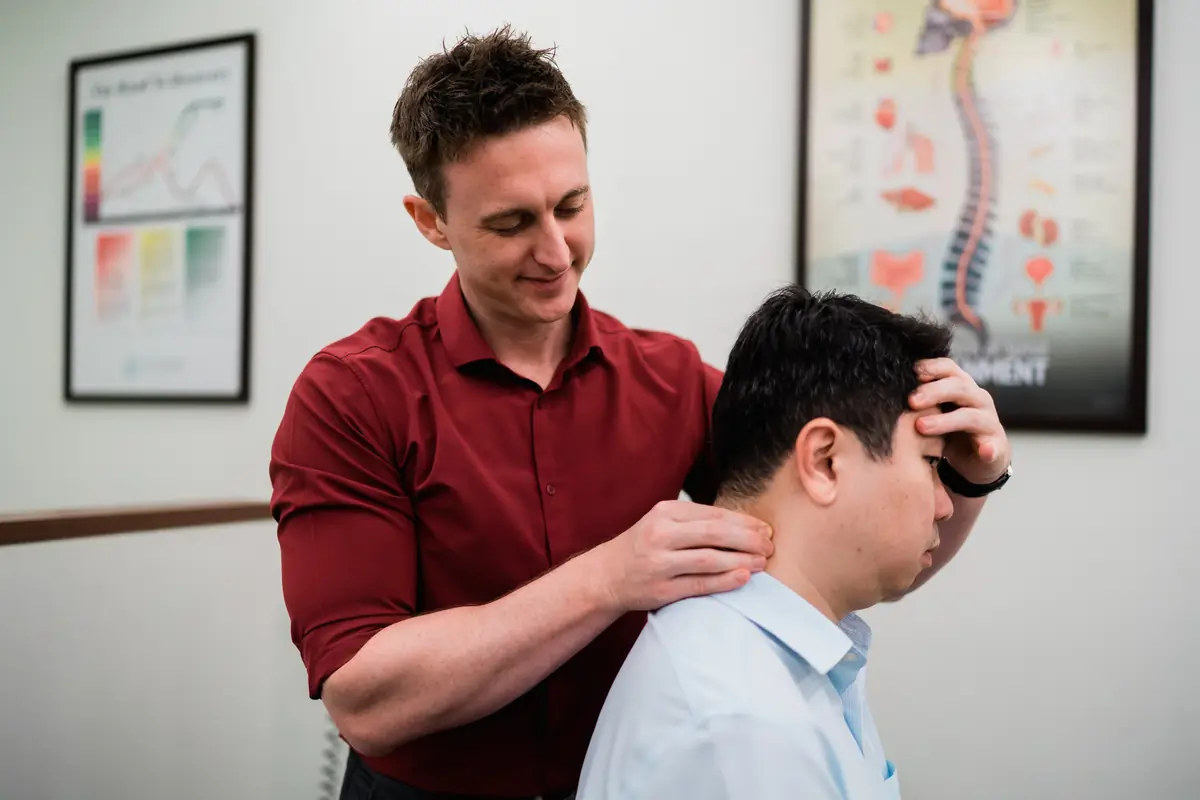
Are you looking for a spine specialist in Singapore?
If your back or neck has been bothering you for weeks or months, it is worth having it assessed rather than waiting it out. A lot of people put a persistent ache down to age and assume everyone their age feels the same. Spinal problems left alone tend to get harder to treat, not easier.
We help people get spinal function back using treatment that does not involve surgery or a hospital stay. What that gives you:
- An approach that treats the source of the pain rather than the symptom
- A treatment plan built for your presentation, aimed at lasting change
- Non-invasive, research-backed therapies used together for a fuller recovery
- A lower-cost, lower-risk route than injections, surgery or long-term medication
What a non-surgical spine specialist does
Surgery is not the only answer for a spine problem, and for most people it is not the first one either. We combine chiropractic care, osteopathic technique, rehabilitation and targeted exercise under one roof, so the assessment and the treatment are not split across three places.
A spine specialist's job here is to work out which structure is generating the pain — disc, joint, nerve or muscle — and then treat that specific thing. That is the difference between pain management and correction.
Your non-surgical spine treatment options
- Chiropractic adjustment. Specific, calibrated work to restore movement where the spine has stopped moving properly.
- Soft tissue therapy. Releasing the muscle and fascial tension that builds up around a spinal problem.
- Spinal decompression. Non-surgical traction that reduces pressure inside the disc, used for slipped disc and disc-related nerve pain.
- Rehabilitation exercise. Strengthening the spine, correcting posture and keeping the pain from returning.
- Shockwave, laser and electromagnetic field therapy. Used where manual therapy alone has stopped making progress.
- Lifestyle guidance. Practical advice on sitting, standing and moving through an ordinary working day.
Conditions we treat without surgery
Back pain and neck pain
Chiropractic adjustment is a well-established treatment for back pain and neck pain, and the two are often part of the same mechanical problem.
Slipped disc
A slipped or herniated disc is one of the most common and most limiting spinal problems, and one of the most responsive to non-surgical care.
Sciatica and nerve pain
Sciatica is back pain that travels into the buttock or leg, often with numbness, pins and needles or weakness. Other nerve problems such as carpal tunnel syndrome and peripheral neuropathy are also treated here.
Shoulder pain
The shoulder is a complex joint and its pain is frequently referred from the neck, which is why we assess shoulder pain and the spine together.
Degenerative and painful joints
Osteoarthritis is among the most common causes of knee pain and general joint pain, and conservative care has a real role in managing it.
Poor posture
Under our Functional Correction Method, postural correction combines treatment, exercise and specific advice rather than a brace or a gadget.
Headaches and migraines
Recurring headaches are often driven by the cervical spine, which is why they respond to spinal treatment more often than people expect.
Spinal stenosis
Spinal stenosis narrows the space around the spinal cord or nerve roots. Decompression is often part of non-surgical stenosis care.
Scoliosis
Scoliosis is managed with a combination of manual therapy and a specific exercise programme.
Accidents and sports injuries
Treating an injury properly at the time reduces the chance of long-term pain and complications later.
What happens when spinal pain is left untreated
Spinal pain usually starts small — a twinge bending down, stiffness after sitting, a dull ache that a stretch takes the edge off. It tends not to stay small.
The consequences of leaving it too long include:
- Chronic pain that limits what you can do with your family
- Difficulty with ordinary tasks, from lifting groceries to tying shoelaces
- Disturbed sleep
- Reduced focus and productivity at work
- Higher risk of further injury and of long-term disability
People who come in early usually need less treatment than people who come in after a year of managing it themselves. Treating the root cause early is also what keeps more invasive options off the table.
Our approach: assessment before treatment
The Functional Correction Method
Our Functional Correction Method combines modern chiropractic adjustment, soft tissue therapy, conservative healing technologies, rehabilitation exercise and lifestyle advice into one plan built around the individual.
Modern chiropractic
Chiropractic care here goes well beyond the adjustment people picture. It uses current equipment and a range of manual techniques, selected for the presentation in front of us.
Therapeutic technologies
We use shockwave, low-level laser and high-intensity electromagnetic field therapy alongside manual care, because some conditions stop progressing on manual therapy alone. The technology supports the plan; it is not the plan.
What the first visit involves
Your first visit is 60 minutes with a doctor. We take your history, examine the spine and the surrounding structures, run orthopaedic and neurological tests where they are needed, and explain what we have found in plain words. Most patients are treated in that same visit once any safety concerns are ruled out. Comparing clinics? Use our checklist for choosing a chiropractor in Singapore.
When a spine problem needs a surgeon, not us
Most spinal pain is non-surgical. Some of it is not. Progressive weakness in a leg or arm, loss of bladder or bowel control, unexplained weight loss alongside spinal pain, or pain that is clearly worsening through a genuine course of conservative treatment all warrant a specialist medical or surgical opinion rather than more of the same. Where imaging is needed we review an existing MRI if you have one, start with an X-ray if you do not, and refer for an MRI where the response to treatment says we should. If your case looks like one for a surgeon, we will say so and refer you.
If this sounds like your situation
- Most spinal conditions are non-surgical when they are assessed properly and treated with the right protocol.
- Every patient begins with a 60-minute first visit — a full assessment and first treatment with a doctor, for $88 online.
- If our care is not the right path for your condition, we will say so and refer you on.
Common questions.
Our patient-care team is happy to walk through anything else over the phone or WhatsApp.
A non-surgical spine specialist works out which structure in your spine is generating the pain — a disc, a joint, a nerve or the muscle around it — and then treats that structure directly. At Elite Spine Centres that means a full assessment first, followed by manual treatment, decompression where a disc is involved, therapeutic technology where manual care has plateaued, and a rehabilitation programme so the problem does not return.
No. You can book directly. Bring any existing scans or reports with you — an MRI or X-ray you already have saves repeating imaging, and we review it as part of the first assessment.
Sometimes, but it is the minority of cases. Progressive weakness, loss of bladder or bowel control, or a clear lack of improvement through a genuine course of conservative care are the signs that a surgical opinion is warranted. We will tell you directly and refer you rather than keep treating something that is not responding.
It depends on the condition and how long it has been going on. Most patients notice meaningful change within four to eight sessions. A full correction, where the aim is to stop the problem recurring, usually runs over a ten to fourteen week treatment phase. Individual responses vary, and we reassess as we go rather than sell a fixed package up front.
Not always. If you already have an MRI we review it. If you do not and imaging is indicated, we usually start with an X-ray, and refer for an MRI where the clinical picture or a poor response to treatment calls for it.
Parkview Square, #14-01, 600 North Bridge Road, Singapore 188778. The clinic is a short walk from Bugis MRT. Call +65 6904 8400 or message us on WhatsApp to arrange a first visit.
Dr. Michael Bryant
Doctor of Chiropractic (USA) · Founder of Elite Spine Centres · Developer of the Functional Correction Method
Dr. Bryant leads the clinic's doctor-led multidisciplinary practice and reviews the clinical information on this page for accuracy.
Speak to a clinician about what is causing your pain.
Your first visit is a 60-minute session with a doctor — a full assessment and your first treatment in the same appointment. We take your clinical history, screen your posture and movement, explain what we find in plain language, and begin treatment if your condition is suitable for our care.