
Super inductive system in Singapore — reaching pain that surface treatments cannot.
High-intensity electromagnetic-field therapy that penetrates deeper than manual or surface modalities. Particularly effective for deep joint pain, post-fracture rehabilitation, and chronic muscular dysfunction.
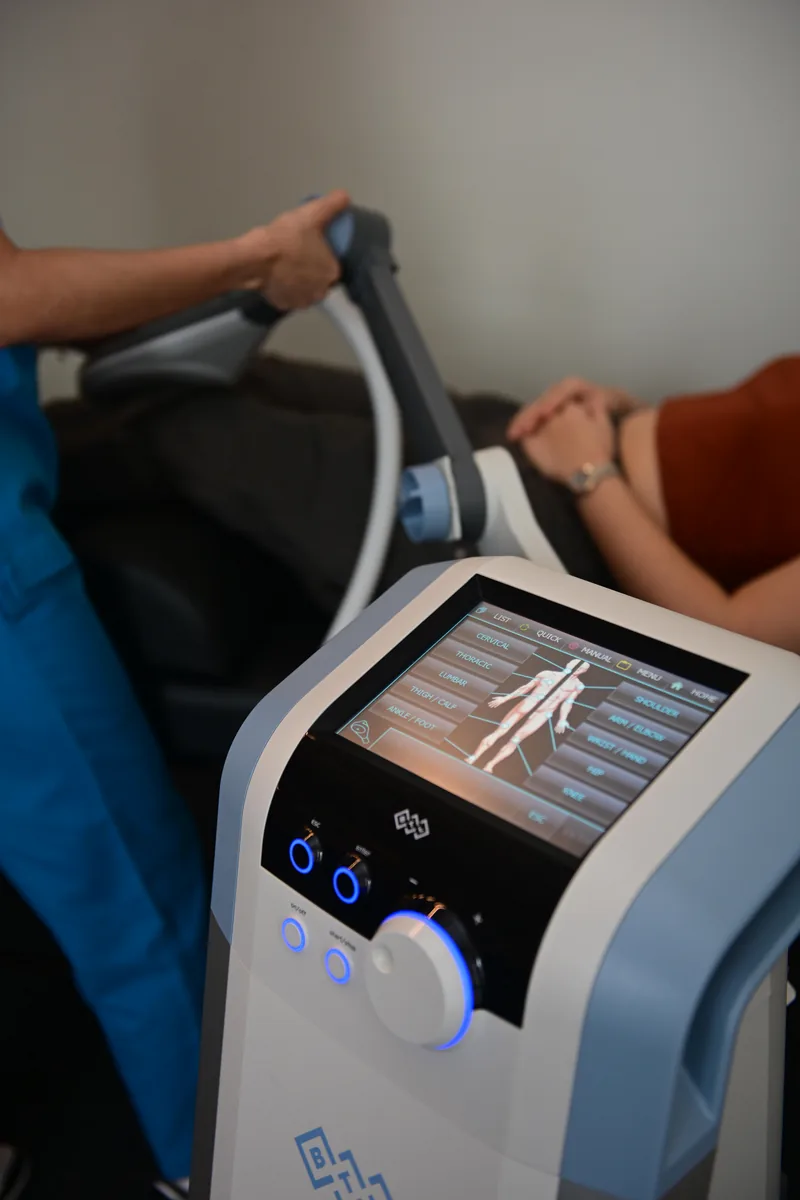
What the super inductive system is
The super inductive system is a high-intensity electromagnetic field therapy used to treat painful musculoskeletal and neurological conditions. It reaches tissue that surface treatments cannot — deep joint pain, post-fracture rehabilitation and long-standing muscular dysfunction. The field is generated by a coil inside the applicator, so nothing touches the skin and no medication is involved.
How the super inductive system works
The therapy relies on the interaction between body tissue and a high-intensity electromagnetic field. A coil inside the applicator creates the field, which causes depolarisation of neuromuscular tissue and, with it, muscle contraction. The stimulation frequency and field intensity are both selected by the clinician, and between them they decide what the session does: relieve pain, support fracture healing, release a blocked joint, or relax or strengthen a muscle.
Our system runs up to 150 Hz and up to 3 Tesla. The applicator delivers therapy without direct skin contact, which is more comfortable for the patient and easier to position accurately. It also has a coil cooling mechanism that holds up even at the device's highest load, so a session can run longer without a pause to let the applicator cool. For a fuller explanation of the science, read how the super inductive system works.
The three pain-control theories behind it
Pain relief with the super inductive system draws on three separate neurophysiological theories of pain control. Because the device covers a wide frequency spectrum, it can be used at every stage of a painful condition rather than only in the acute or only in the chronic phase.
Endogenous opioid theory
The body produces endorphins — its own opioids — in response to pain. Stimulating nerve endings at frequencies between 2 and 10 Hz prompts the release of these natural painkillers. This is the setting used where chronic back pain or neck pain needs early relief.
Gate control theory
Pain signals reach the brain through nerve fibres and what is described as the spinal gate. Small-diameter fibres open that gate and let pain through. Stimulating the large-diameter fibres closes it, so the signal does not travel on to the central nervous system. Frequencies between 60 and 100 Hz are used here, and this setting is most useful for sudden musculoskeletal pain.
Peripheral pattern theory
Pain travels to the brain as coded information through the peripheral nervous system, where it is decoded and processed. Stimulating the area at high frequencies of 120 to 140 Hz means the coded information is no longer interpreted as pain.
Using all three together is what allows many patients to begin rehabilitation sooner than they otherwise could, because the pain is low enough to let them move.
Benefits of the super inductive system
Repeated magnetic stimulation of peripheral tissue produces several distinct effects:
Joint mobilisation
Gentle repeated movement relieves blockage or adhesion in a joint, whether in the spine or elsewhere in the body.
Muscle stimulation
The field can be used to prevent muscle tissue wasting and to maintain or strengthen a weakened muscle.
Fracture healing
A fracture usually takes around six weeks to heal. Through that period, improved blood circulation supports new bone formation.
Reduced spasticity
Relaxing and then stimulating the affected muscle group in sequence reduces the spasticity that comes with some musculoskeletal and neurological conditions.
What the super inductive system is used for
Alongside the other therapies in our Functional Correction Method, the super inductive system is used for:
- Chronic pain that has not settled with manual therapy alone
- Frozen shoulder
- Slipped disc
- Patellar tendinopathy and other knee pain
- Deep joint pain in the hip, shoulder or sacroiliac joint
- Post-fracture rehabilitation
- Spinal pain that has not fully responded to surface-level treatment
Who it is for
- Deep joint pain (hip, shoulder, sacroiliac)
- Post-fracture rehabilitation
- Chronic muscular dysfunction
- Spinal pain that has not fully responded to surface-level treatment
Contraindications + honest screening
Patients with implanted cardiac devices (pacemaker, defibrillator), implanted neurostimulators, or active malignancy in the treatment area. We screen at the first consultation.
What a session looks like
Each session takes 15–20 minutes. Used in combination with manual therapy and rehabilitation as part of a broader treatment plan that may also include laser therapy.
Typical treatment arc
6–12 sessions over the active treatment phase.
Where this service fits
- Super inductive system is one component of the broader Functional Correction Method — used in isolation only where a multi-modal plan is not clinically indicated.
- Each session is preceded by a brief reassessment so the treatment evolves with the patient.
- If this modality is not the right fit for your condition, we will say so at the first consultation.
Common questions.
Our patient-care team is happy to walk through anything else over the phone or WhatsApp.
Dr. Michael Bryant
Doctor of Chiropractic (USA) · Founder of Elite Spine Centres · Developer of the Functional Correction Method
Dr. Bryant leads the clinic's doctor-led multidisciplinary practice and reviews the clinical information on this page for accuracy.
Speak to a clinician about what is causing your pain.
Your first visit is a 60-minute session with a doctor — a full assessment and your first treatment in the same appointment. We take your clinical history, screen your posture and movement, explain what we find in plain language, and begin treatment if your condition is suitable for our care.