
Myofascial release in Singapore — the missing piece in long-standing musculoskeletal cases.
Sustained, calibrated soft-tissue work targeting the fascia — the connective tissue that often holds chronic tension after the structural correction has already happened. Firmer and more specific than a massage.
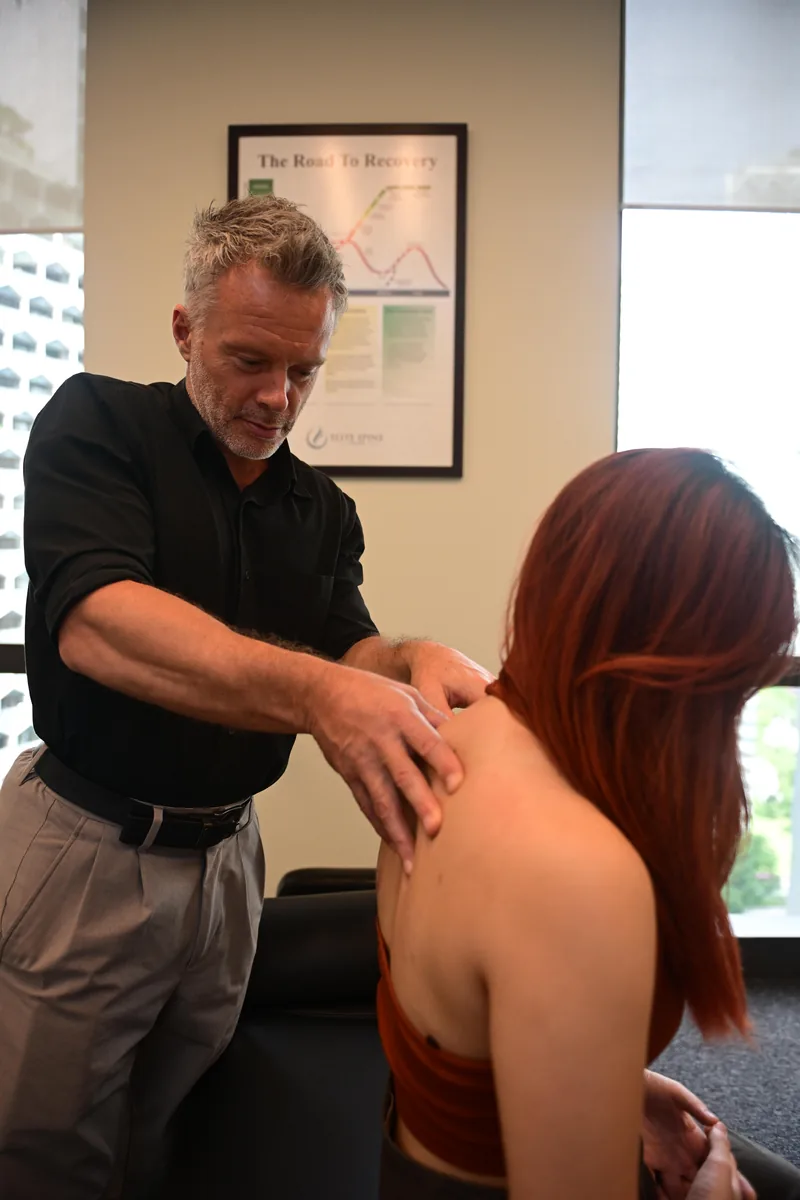
What myofascial release is
Myofascial release is a hands-on therapy that relieves tension and restriction in the muscles and the fascial system. Fascia is a thin but strong layer of connective tissue that surrounds and supports muscles, bones, nerves and organs. It forms one continuous web through the body, holding things stable while still allowing smooth, coordinated movement.
Healthy fascia is flexible and elastic, so muscles and joints move freely. Injury, repetitive strain, poor posture or long-running stress can leave it tight and restricted. Restricted tissue then presses on the muscles and nerves around it, which produces pain, stiffness and reduced movement.
The therapy gently stretches and releases those restrictions. Sustained pressure is applied to the affected area to restore flexibility and balance in the connective tissue. The aim is better movement, less pain and healthier musculoskeletal function overall.
How myofascial release works
Treatment applies sustained, gentle pressure where the fascia has tightened. Unlike a conventional massage, which uses quick or rhythmic movement, a myofascial session is deliberately slow and narrowly targeted.
The practitioner first assesses movement patterns and tissue tension to find where the restriction sits. Pressure is then applied with the hands, fingers or forearms to stretch and soften the fascia gradually. Under sustained pressure the connective tissue begins to lengthen and release, which can take anywhere from 90 seconds to several minutes in one area.
The point is to let the fascia return to a flexible state rather than force it. Because fascia is closely tied to the nervous system, working this gently also calms the body's stress response. As tension releases, muscles relax, circulation improves and movement becomes easier.
What myofascial release helps with
Fascia connects structures across the whole body, so a restriction in one place can produce symptoms somewhere else. Myofascial release is used for a wide range of musculoskeletal conditions:
- Chronic neck pain and back pain
- Shoulder tension and limited shoulder movement
- Sports injuries and muscle strain
- Postural problems from long hours sitting
- Headaches and tension-related pain
- Hip and pelvic tightness
- Muscle stiffness and reduced flexibility
It can also help people managing widespread chronic pain conditions such as fibromyalgia, where muscle tenderness and fatigue are spread across the body. Releasing fascial restriction improves circulation, takes pressure off nerves and supports better muscle function. Athletes and active people use it to recover from hard training and to reduce the chance of the same injury returning. Individual responses vary, which is why we assess before we treat.
What a myofascial release session looks like
A session starts with a consultation and physical assessment. The practitioner looks at posture, range of movement and where tension or restricted movement shows up, in order to find the fascial restrictions behind the pain or stiffness.
During treatment you lie comfortably on a treatment table while gentle pressure and stretching techniques are applied to specific areas. You may feel warmth, a gentle stretch, or tension gradually giving way. Some areas feel slightly tender at first; pressure is adjusted through the session so it stays comfortable.
Some patients report relief straight away, with better mobility, less muscle tension and a general sense of being more relaxed. Where restrictions are deeper or longer standing, a series of sessions usually gets a better result than one.
Who should consider myofascial therapy
The therapy suits a wide range of people, from those managing long-term pain to active people wanting better flexibility and fewer injuries. Because it works on restoring balance in connective tissue, it adapts well to different lifestyles and activity levels. It is particularly useful for:
- Office workers who spend long hours sitting at a desk
- Athletes managing muscle tightness or overuse injury
- People with chronic neck or back pain
- People recovering from a physical injury
- Anyone with limited flexibility or restricted range of movement
Because muscles across the body are linked through fascia, releasing a restriction in one area can improve several regions at once. The treatment is non-invasive and every session is adjusted to the individual's needs and comfort.
Myofascial release also pairs well with the other therapies here. If joint or nerve discomfort is part of the picture, spinal decompression or neuropathy treatment may belong in the same plan. Fascial tension around the shoulder is often treated alongside shoulder pain treatment.
Our approach to myofascial release in Singapore
We treat musculoskeletal health as one system. Rather than looking only at spinal alignment and joint movement, we also address the muscles and connective tissue that support those structures, and that is where myofascial therapy does its work.
Every patient starts with a full assessment of posture, movement patterns and areas of tissue tension. Once the practitioner has identified which fascial restrictions are driving the discomfort, treatment addresses those rather than masking the symptom.
Combining myofascial release with chiropractic care gives a more complete approach. Each patient gets a plan built around their lifestyle, activity level and goals, whether that is reducing long-term pain, recovering from an injury or simply moving better.
Myofascial release compared with a regular massage
The practical difference shows up in how a session runs. A massage covers a broad area at a steady pace and is judged on how relaxed you feel afterwards. Myofascial work may spend several minutes on a single restriction and is judged on whether your movement changed, which is why the practitioner re-tests range of motion during the session rather than only at the end.
That is also why it is prescribed rather than chosen. A massage is useful whenever tension builds up. Myofascial release is used when an assessment has found a specific restriction that is holding a joint or a movement pattern back. The full comparison is in myofascial release and how it differs from a massage.
Who it is for
- Chronic muscular tension and trigger points
- Postural pain that resists postural correction alone
- Post-injury scar tissue
- Sports recovery
- TMJ and jaw tension (referred)
Contraindications + honest screening
Active acute injury, areas of acute inflammation, infection, or recent surgery. Treatment timing is staged with your clinical recovery.
What a session looks like
Each session is 30–60 minutes, depending on the area treated and the depth of the work required.
Typical treatment arc
Typically used throughout the active treatment phase, frequency adjusted to clinical need.
Where this service fits
- Myofascial release is one component of the broader Functional Correction Method — used in isolation only where a multi-modal plan is not clinically indicated.
- Each session is preceded by a brief reassessment so the treatment evolves with the patient.
- If this modality is not the right fit for your condition, we will say so at the first consultation.
Common questions.
Our patient-care team is happy to walk through anything else over the phone or WhatsApp.
This depends on the nature and severity of your fascial restrictions. Some patients notice significant improvement after just one or two sessions, particularly for acute issues. Chronic or long-standing restrictions typically respond better to a series of sessions. Your practitioner will adv ise on the most appropriate course of treatment following your initial assessment.
Myofascial release should not be painful. You may feel a mild sensation of pressure or slight tenderness in restricted areas, but the technique is deliberately gentle and non-forceful. If you experience any discomfort during a session, your practitioner will adjust the pressure immediately. Many patients describe the experience as deeply relaxing.
Yes, and the combination is often more effective than either therapy alone. Chiropractic care focuses on restoring spinal alignment and joint function, while myofascial release addresses the connective tissues and muscles that support those structures. At Elite Spine Centres, both are frequently incorporated into a single, integrated treatment plan.
Dr. Michael Bryant
Doctor of Chiropractic (USA) · Founder of Elite Spine Centres · Developer of the Functional Correction Method
Dr. Bryant leads the clinic's doctor-led multidisciplinary practice and reviews the clinical information on this page for accuracy.
Speak to a clinician about what is causing your pain.
Your first visit is a 60-minute session with a doctor — a full assessment and your first treatment in the same appointment. We take your clinical history, screen your posture and movement, explain what we find in plain language, and begin treatment if your condition is suitable for our care.