What causes shoulder pain
Shoulder pain has many causes — rotator cuff strain or tear, shoulder impingement, biceps tendinopathy, AC joint dysfunction, and pain referred from the neck. The right treatment depends on identifying which structures are actually involved.
Chiropractic care for shoulder pain
Most people with shoulder pain do not think of a chiropractor, assuming chiropractic care only covers the back and neck. In practice it is one of the more effective routes for shoulder problems, particularly where the shoulder is not the only thing going wrong.
We treat every type of shoulder presentation using our Functional Correction Method. Whether the problem is a specific injury or ongoing stiffness through the neck and shoulder that limits how far the joint will move, the aim is the same: restore the movement and keep it.
The shoulder conditions and instabilities we see most often are:
- Persistent pain at the back of the shoulder
- Sprains of the ligaments and strains of the shoulder muscles and tendons
- Pain radiating from the cervical spine
- Shoulder bursitis
- Shoulder tendinitis
- Rotator cuff injury and tendon tears
- Arm numbness
- Frozen shoulder
- Shoulder arthritis
Are you struggling to move your shoulder?
If the shoulder feels stiff and sore, and ordinary things — reaching for a mug, brushing your hair, putting on a shirt — have started to feel like hard work, frozen shoulder is one possibility worth ruling in or out early.
Frozen shoulder does not reliably improve on its own with time. The longer it is left, the harder it becomes to get full use of the shoulder back, which is the main reason not to wait and see.
Why your spine may be the root cause of your shoulder pain
Shoulder pain is often not about the shoulder itself. A lot of the time it comes from how the spine and upper back move, or do not move.
Long hours sitting at a desk at the wrong angle puts sustained strain through the neck, upper back and shoulders. Over time that restricts movement, irritates nerves and contributes to conditions like frozen shoulder.
So our assessment does not stop at the shoulder joint. We look at how the spine, the surrounding muscles and your posture are affecting it. Treating the underlying cause is what makes relief last rather than return.
Our treatment approach
We assess the shoulder as part of a connected kinetic chain — including the cervical spine, scapula, and thoracic spine — and design treatment around the actual pain generator. Most non-surgical shoulder pain responds to a combination of manual therapy, targeted therapeutic technology, and progressive rehabilitative exercise.
Step one — initial consultation
Our doctor of chiropractic reviews your symptoms and health history in detail to understand what is likely to be causing the shoulder pain. We work through your concerns so you understand the condition before any treatment starts. There are no hard sales and no long treatment packages.
Step two — shoulder and spine examination
A thorough physical examination of the shoulder follows. It usually involves:
- Checking for fibrous scar tissue
- Examining the rotator cuff muscles to test shoulder movement and muscle strength
- Checking the surrounding spinal mechanics to see whether they are affecting the shoulder complex
Orthopaedic or neurological tests may be added to rule out other underlying causes and reach a proper diagnosis. Most patients can be treated in that first session once safety concerns have been ruled out.
Step three — report and recommendations
The doctor reviews how you responded to the first session, along with any imaging requested such as X-rays or an MRI, then discusses a plan built around your treatment goals. This is also where to raise questions or concerns.
Step four — treatment
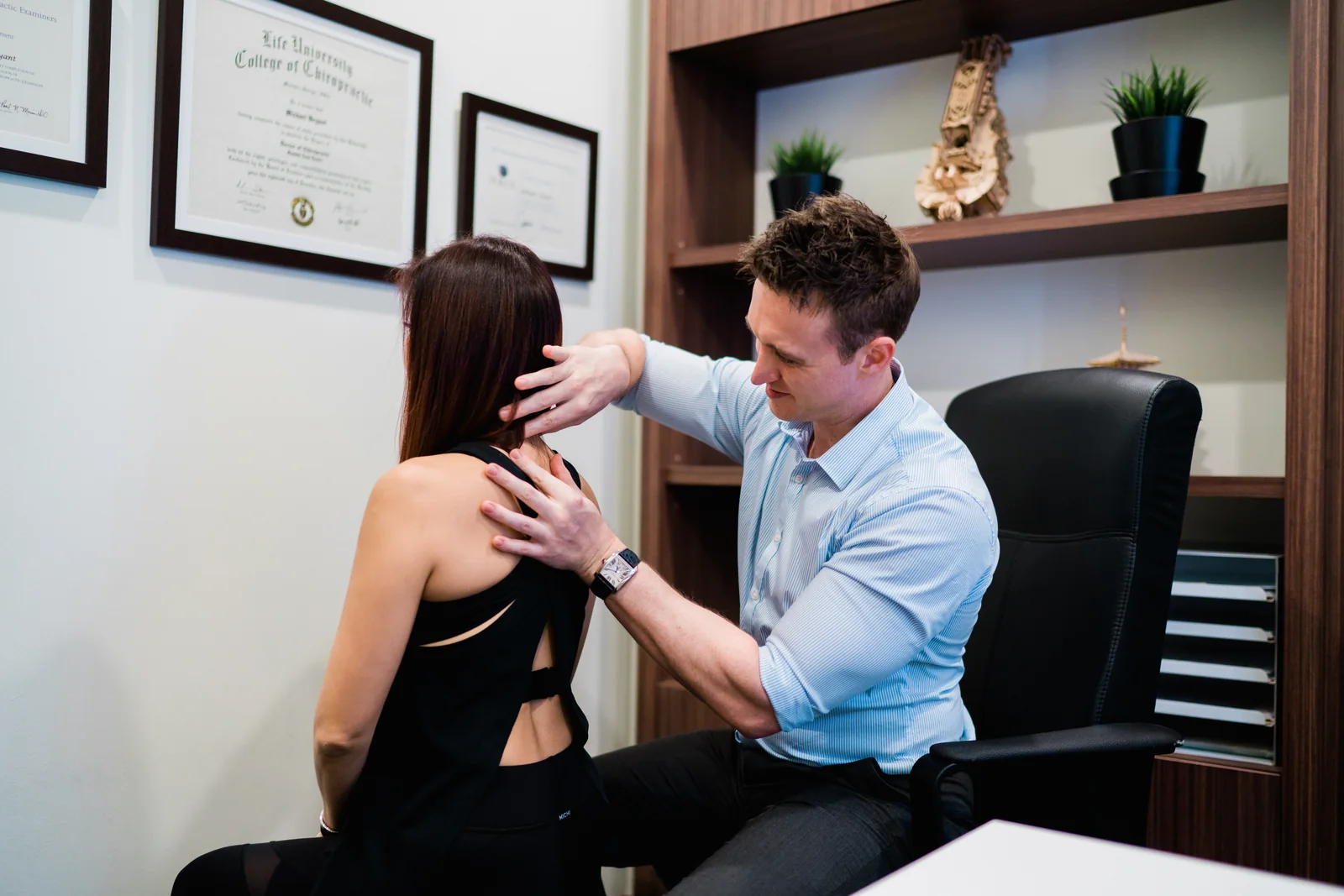
Treatment usually involves chiropractic manipulation to restore alignment and improve blood flow to the soft tissue. Where it helps, advanced therapeutic technology is added. The plan also includes lifestyle advice and rehabilitation exercises, so the condition does not recur and normal movement patterns and posture are restored for the long term.
Modalities used
What to expect at our shoulder pain clinic in Singapore
We do not look only at the painful area. We assess your posture, your movement patterns and your spinal alignment to find what is actually causing the pain — how you sit, how you move, how the spine is working. From there we release tight muscle, restore joint movement, and give you simple exercises to do at home, plus practical advice for everyday life that lowers the chance of a flare-up.
Most shoulder conditions respond within 8–12 sessions. Tendinopathies and post-injury cases may require a longer rehabilitation phase to fully restore function.
When shoulder pain needs a surgical opinion
Most rotator cuff and shoulder pain responds well to non-surgical care. A minority of cases — typically a full-thickness rotator cuff tear — do not, and are better served by an orthopaedic surgical assessment. Signs this may apply to you: sudden pain onset from a specific injury or fall, significant weakness or inability to lift the arm away from the body, or no meaningful improvement after a genuine course of conservative treatment. We will tell you directly if your presentation looks like one of these, and refer you to an orthopaedic specialist rather than continue treatment that isn't the right fit.
If this matches your symptoms
- Most cases of shoulder pain are non-surgical when treated with the right protocol.
- Every patient begins with a 60-minute first visit — a full assessment and first treatment with a doctor, for $88 online.
- If our care is not the right path for your condition, we will say so and refer you on.