What sciatica is
Sciatica describes the symptoms produced when the sciatic nerve — the longest and widest nerve in the body — becomes compressed or irritated. The most common cause is a herniated disc in the lower spine, although it can also be triggered by spinal stenosis, piriformis syndrome, or postural mechanics.
The nerve runs from the lower back, through the hips and buttocks, and down into the legs. When it is irritated it becomes inflamed and painful, and the leg can go numb. Some people describe a dull ache, others a sharp pain closer to an electric shock. Sciatica usually affects one leg, though it can affect both at once.
I suffered from sciatica and back pain for five years and tried physiotherapy, acupuncture, and massage with no real relief. After a few sessions with Dr. Bryant, along with the tailored exercises he provided to do at home, I noticed a significant improvement in my pain. Chiropractic care was truly my last option, and it made a remarkable difference.— Jasmine Wong · Sciatica · Five-year history
Symptoms of sciatica
The signs that point to sciatica include:
- Burning or tingling that runs down the thigh and leg
- Weakness in the leg or foot
- Sharp pain when sitting
- Pain on standing or walking
- Pain that feels like an electric shock
- Numbness or pins and needles reaching into the foot
Where the ache is mild, it often settles within a few days. Get it assessed if the pain does not respond to medication, or if symptoms are worse after a week.
What causes sciatica pain
There is no single cause. The common ones are:
- A slipped or herniated disc pressing on the nerve
- Poor posture built up over hours at a desk or hunched over a laptop
- Tight muscles in the lower back or buttocks trapping the nerve
- Degenerative change in the spine that comes with age
Pregnancy and significant weight gain can also bring it on, because both put the lumbar spine under sustained strain, which irritates the nerves and raises the risk of low back pain and leg weakness.
Sciatica becomes more common with age, particularly from 40 onwards, and affects an estimated 10 to 40 per cent of people at some point. It is rare under the age of 20 unless there has been a specific trauma.
Non-surgical sciatica treatment
There are many ways to treat sciatica, and most people prefer the conservative options — self-care and physical therapy — over steroid injections or surgery.
For milder cases, a cold or hot pack on the affected area with some light stretching can be enough to settle the nerve pain, and over-the-counter medication may speed that along. Surgery is the last resort, reserved for severe cases, particularly where bowel or bladder control is affected.
Where none of that is working and you want to avoid surgery, chiropractic care is the next option to consider.
We do not do quick fixes or five-minute adjustments. Each plan is built around the individual, and typically includes:
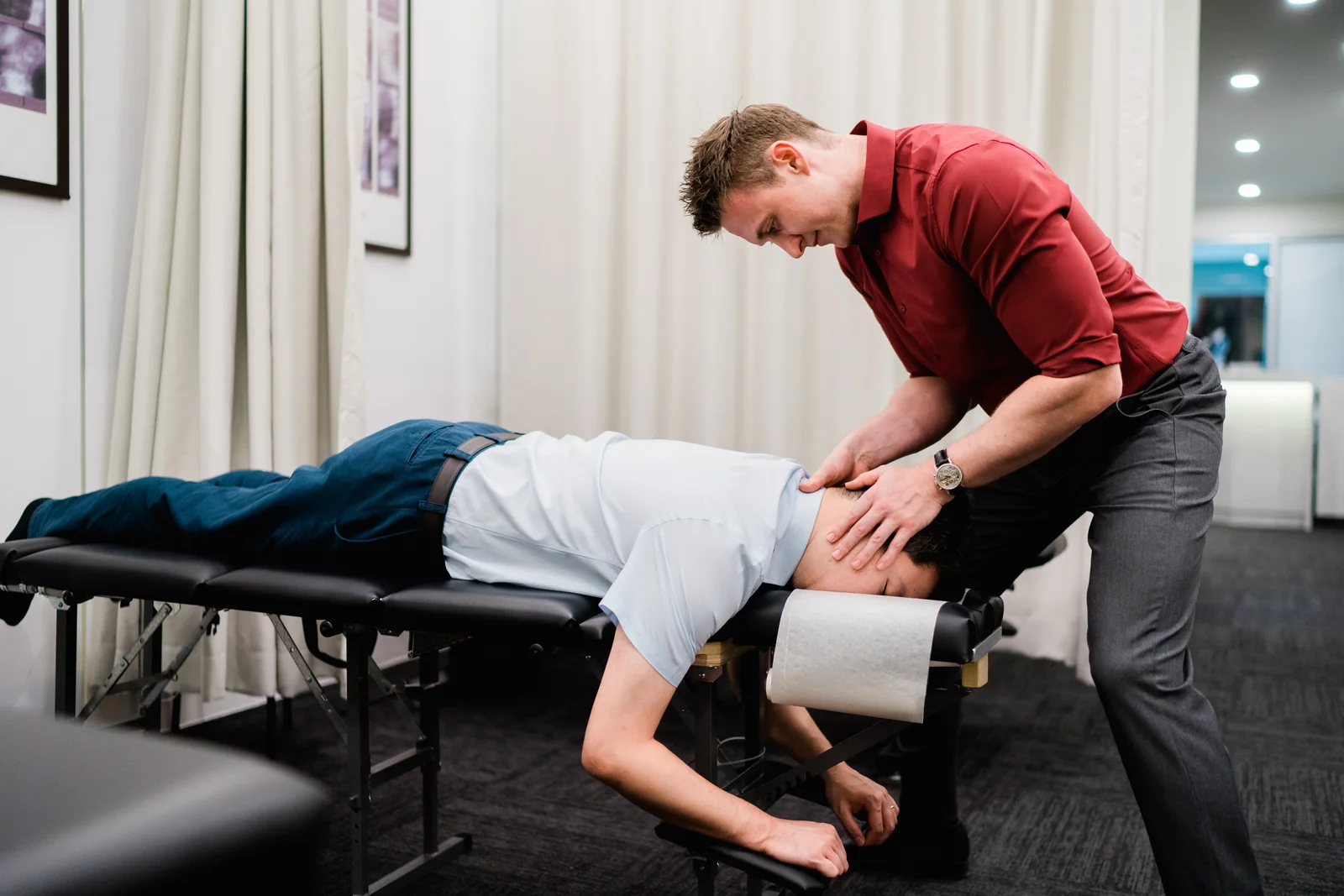
- Gentle chiropractic adjustment to take pressure off the sciatic nerve and restore normal spinal movement
- Soft tissue therapy to relax the tight back and hip muscles that may be pressing on the nerve
- Rehabilitation exercises to strengthen weak areas and improve flexibility
- Posture and lifestyle coaching, so how you sit, stand and move stops working against your spine
Our treatment approach
We treat sciatica by identifying and addressing the source of the nerve compression — not only the leg symptoms. Most patients arrive after weeks or months of pain that has not resolved with rest, medication, or general physiotherapy. Our protocol combines spinal decompression to relieve disc pressure, soft tissue and manual therapy to reduce muscular compensation, and progressive rehabilitative exercise to restore movement patterns.
Step one — initial consultation
Our doctor of chiropractic goes through your symptoms and health history in detail: when the pain started, how it feels, what makes it worse, and what you have already tried. That tells us how the problem is affecting your life, not just your back. No hard sales, no long packages.
Step two — spine and nerve examination
A physical examination of the lower back, pelvis and leg follows. It typically involves nerve tension testing to confirm sciatic nerve involvement, checking leg muscle strength and reflexes for signs of nerve compression, and assessing lumbar and pelvic mechanics to find where the pressure is coming from. Orthopaedic and neurological tests are added where needed to rule out other causes. Most patients can be treated in that first session once safety concerns are cleared.
Step three — report and recommendations
We explain not just what hurts but why it is happening, in plain words. Most people find real relief simply in understanding what is going on. The doctor reviews your response to the first session and any imaging requested, then sets out a plan against your own goals — getting through a workday without pain, playing with your children, returning to sport.
Step four — treatment
Treatment combines spinal decompression and chiropractic adjustment to take pressure off the disc and nerve, soft tissue work to release the muscular compensation that has built up, and a progressive exercise plan. Lifestyle advice is part of the plan, so the condition does not come back once the pain has gone.
Modalities used
What to expect from your sciatica treatment in Singapore
Sciatica responds well to conservative care in the majority of cases. Most patients notice meaningful pain reduction within 4–8 sessions, with full structural correction over a 10–14 week treatment arc. Every plan is different; the goal is the same — move better, feel better, and get back to normal life.
If conservative care isn't resolving it
A minority of cases do not respond adequately to conservative treatment. If pain, numbness, or weakness is not improving after a reasonable course of care, or is worsening, the next step is imaging (MRI) and a referral to a spine specialist to assess whether the underlying disc problem needs a more targeted intervention. We will tell you directly if your case looks like one of these rather than continue treatment that isn't working.
If this matches your symptoms
- Most cases of sciatica are non-surgical when treated with the right protocol.
- Every patient begins with a 60-minute first visit — a full assessment and first treatment with a doctor, for $88 online.
- If our care is not the right path for your condition, we will say so and refer you on.