
Spinal Stenosis Symptoms: What Narrowing of the Spine Feels Like and How It Is Managed
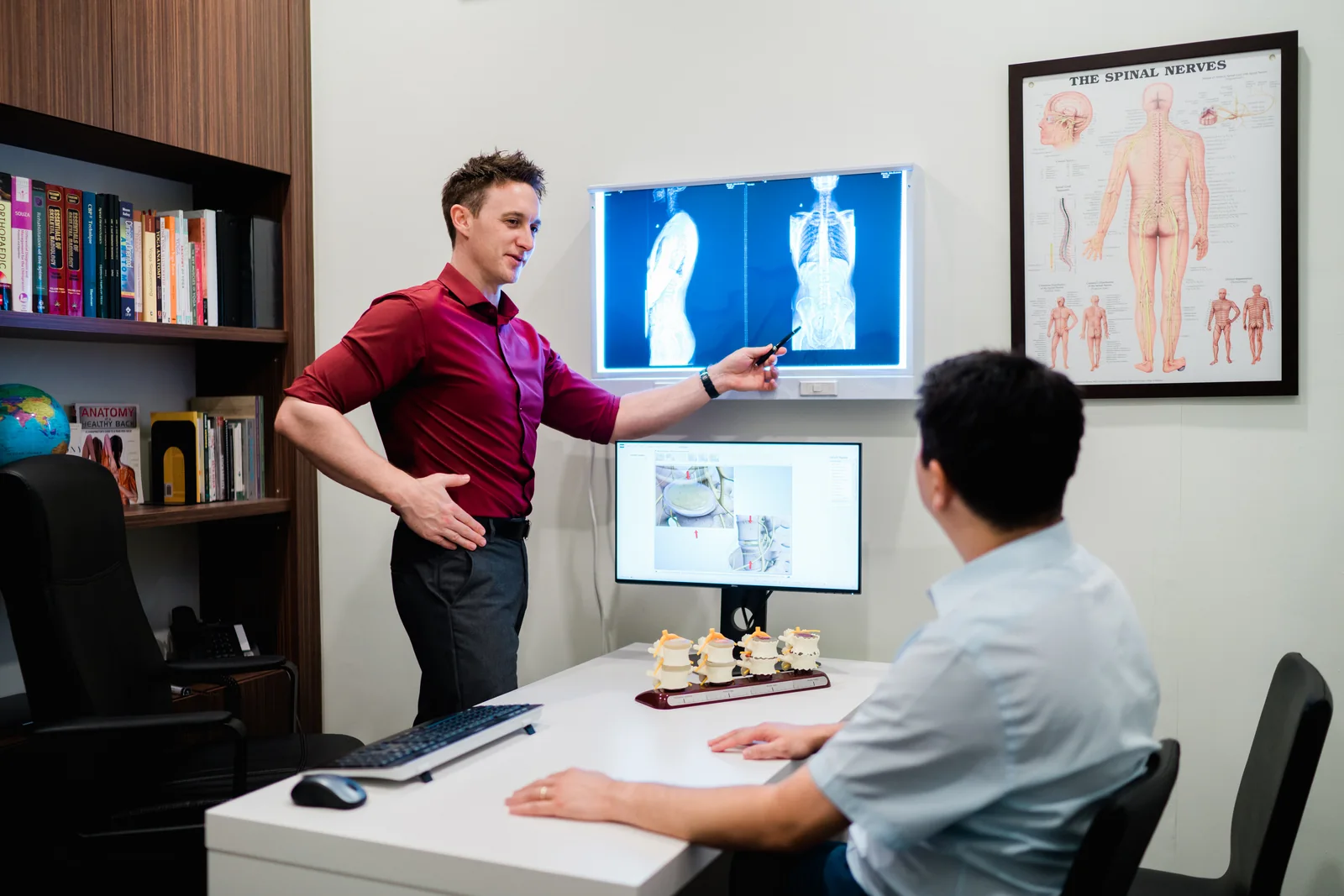
Spinal stenosis is a narrowing of the spaces inside the spine that puts pressure on the spinal cord or the nerve roots branching from it. In the lower back, its signature symptom is pain, heaviness or tingling in the buttocks and legs that builds with standing or walking and eases when you sit down or lean forward. The US National Institute of Arthritis and Musculoskeletal and Skin Diseases notes that the narrowing usually develops over time and that the chance of developing it increases with age (NIAMS).
Stenosis is a chronic condition, and the aim of treatment is to help you stay active and live well with it. This guide explains the symptoms, how stenosis differs from other causes of leg pain, the warning signs that need urgent care, and the non-surgical options with the best evidence.
Key takeaways
- Spinal stenosis is a narrowing of the spinal canal or the openings where nerves leave the spine. It most often affects the lower back and neck.
- Lumbar stenosis typically causes leg pain, numbness or cramping on walking that eases with sitting or bending forward. Clinicians call this neurogenic claudication.
- Loss of bladder or bowel control, numbness around the groin, or rapidly worsening leg weakness need emergency assessment.
- A Cochrane review found no clear benefit of surgery over non-surgical care, and no side effects were reported for conservative treatment (Zaina et al., 2016).
- Manual therapy combined with individualised exercise improved symptoms and walking more than medication or group exercise in the short term (Schneider et al., 2019).
What is spinal stenosis?
Spinal stenosis happens when the spaces in the spine narrow and create pressure on the spinal cord and nerve roots, according to NIAMS. The narrowing can affect the central spinal canal, the space where nerve roots branch off, or the openings between vertebrae through which nerves leave the spine. It most commonly develops in the lower back (lumbar spine) and the neck (cervical spine) (NIAMS).
The narrowing is usually caused by several age-related changes happening together. Discs lose height and bulge backwards, the facet joints enlarge with arthritis, and the ligament that lines the back of the canal thickens. Less commonly, some people are born with a narrow spinal canal, or develop stenosis after an injury. Because these changes build up slowly, symptoms tend to develop gradually over months or years rather than suddenly.
What are the symptoms of spinal stenosis?
The symptoms depend on where the narrowing is. NIAMS lists the following for stenosis in the lower back: pain in the lower back; burning pain or aching that spreads into the buttocks and legs, typically worse with standing or walking and better when leaning forward; numbness, tingling or cramping in the legs and feet; and weakness in the legs and feet (NIAMS).
Stenosis in the neck can cause neck pain, numbness or tingling that runs down the arms into the hands, and weakness in the hand, arm or fingers. Some people with narrowing seen on a scan have no symptoms at all.
Why does leaning forward help?
Bending forward opens up the spinal canal and enlarges the spaces at the back of the spine, which takes pressure off the nerves; standing upright and arching backwards narrows those spaces again (NIAMS). This is why many people with lumbar stenosis find they can walk further while leaning on a supermarket trolley, can cycle more comfortably than they can walk, and feel relief within minutes of sitting down.
This position-dependent pattern is one of the most useful clues in diagnosis. Leg pain from a disc problem is often worse with sitting and bending forward; leg pain from stenosis is typically worse with standing and walking and better with sitting. Our guide to sciatica versus a slipped disc explains the disc side of this comparison.
When are spinal stenosis symptoms an emergency?
NIAMS notes that people with more severe stenosis may have problems with bowel, bladder or sexual function (NIAMS). New loss of bladder or bowel control, numbness in the groin or buttocks (sometimes called saddle numbness), or weakness in the legs that is getting rapidly worse can indicate severe compression of the nerves at the base of the spine, known as cauda equina syndrome. This is a medical emergency. Go to a hospital emergency department or call 995 in Singapore.
In the neck, increasing clumsiness of the hands, difficulty with buttons or handwriting, or problems with balance can indicate pressure on the spinal cord itself. These symptoms need prompt assessment by a medical specialist.
How is spinal stenosis diagnosed?
Diagnosis combines your history, a physical and neurological examination, and imaging. The pattern of symptoms described above, particularly leg symptoms that come on with walking and ease with sitting, raises the suspicion. MRI or CT scans confirm the narrowing and show where it is. A clinician will also check for other causes of leg pain on walking, such as reduced blood flow to the legs, which tends to ease with standing still rather than needing to sit or bend forward.
Scans need to be interpreted alongside symptoms, because narrowing on imaging is common in older adults who have no pain. The treatment plan is based on how the stenosis affects you, not only on the scan.
At Elite Spine Centres, many people who come to us already have a stenosis diagnosis and an MRI, which we review with you. If you have no previous imaging, we usually start with X-rays, which cost less and show the degenerative changes, such as advanced disc degeneration, that commonly come with narrowing of the canal. If you are not responding to care as expected, we may refer you for an MRI.
Can spinal stenosis be treated without surgery?
For many people, yes. Lumbar spinal stenosis is the most common reason for spine surgery in older US adults, yet there has been a gap in evidence about non-surgical options (Schneider et al., JAMA Network Open, 2019). A Cochrane review of randomised trials concluded that there is very little confidence about whether surgery or a conservative approach is better, noted that side effects occurred in 10% to 24% of surgical cases while none were reported for conservative treatment, and advised clinicians to inform patients carefully about all options (Zaina et al., Cochrane Database of Systematic Reviews, 2016).
In a randomised trial of 259 adults over 60 with lumbar stenosis, a combination of manual therapy and individualised exercise, delivered by chiropractors and physical therapists, produced greater improvement in symptoms, physical function and walking capacity at two months than medical care or group exercise. By six months the three groups were similar, and all three improved long-term walking capacity (Schneider et al., 2019).
Surgery remains the right choice for some people, including those with progressive neurological weakness, cauda equina syndrome, or severe symptoms that have not responded to a good course of conservative care. Assessment determines which path is appropriate.
How does Elite Spine Centres manage spinal stenosis?
At Elite Spine Centres, spinal stenosis treatment begins with an assessment of your symptoms, walking tolerance, neurological function and any imaging, so the plan reflects how the condition affects your daily life. A typical plan combines:
- Manual therapy, including joint mobilisation and chiropractic techniques suited to an older spine, to improve movement in stiff segments of the lower back and hips.
- Flexion-based and individualised exercise, to build strength and walking tolerance while using positions that open the spinal canal. This is delivered through our rehabilitative exercise programme.
- Soft-tissue therapy for the muscles of the lower back, buttocks and hips that tighten as a result of altered walking.
- Spinal decompression, which is often part of non-surgical care for spinal stenosis. Whether it suits you depends on how severe the narrowing is and other factors found at assessment; it is not used where there is spinal instability, previous spinal fusion or advanced osteoporosis, for example.
Progress is measured by what matters to you, such as how far you can walk, how long you can stand, and how well you sleep. If your symptoms change or neurological signs develop, we will refer you for a medical or surgical opinion. For a comparison of non-surgical and surgical approaches to disc problems, see our article on spinal decompression versus surgery.
Speak to the Team at Elite Spine Centres
If leg pain, heaviness or tingling is limiting how far you can walk, the team at Elite Spine Centres can assess the cause and explain your non-surgical options. To book a consultation, call +65 6904 8400 or message us on WhatsApp at +65 9727 3603.
Frequently Asked Questions
What are the first signs of spinal stenosis?
Early signs are often aching or heaviness in the buttocks or legs after walking or standing for a while, which eases when you sit or lean forward. Lower back stiffness and tingling in the legs are also common. Symptoms usually develop gradually.
What is the difference between spinal stenosis and a herniated disc?
A herniated disc is a specific injury to one disc, more common in younger adults, and leg pain is often worse with sitting and bending. Stenosis is a gradual narrowing of the canal, more common with age, and leg symptoms are typically worse with standing and walking and better with sitting.
Does spinal stenosis get worse over time?
It varies. The narrowing tends to develop slowly, and many people's symptoms remain stable for long periods with the right management. Worsening weakness, balance problems or bladder and bowel changes should be assessed promptly.
Is walking good for spinal stenosis?
Staying active is important. Walking in shorter bouts, using a slight forward lean, and building distance gradually help many people. Cycling or walking uphill is often more comfortable, because these positions open the spinal canal.
Does spinal stenosis always need surgery?
No. A Cochrane review found no clear benefit of surgery over non-surgical care for lumbar stenosis, with side effects in 10% to 24% of surgical cases. Surgery is considered for progressive weakness, bladder or bowel problems, or severe symptoms that do not respond to conservative care.
Sources
- National Institute of Arthritis and Musculoskeletal and Skin Diseases (NIAMS). Spinal Stenosis. niams.nih.gov
- Zaina F et al. Surgical versus non-surgical treatment for lumbar spinal stenosis. Cochrane Database of Systematic Reviews, 2016. PubMed 26824399
- Schneider MJ et al. Comparative clinical effectiveness of nonsurgical treatment methods in patients with lumbar spinal stenosis: a randomized clinical trial. JAMA Network Open, 2019. PubMed 30646197
This article is for general information and does not replace a diagnosis from a qualified healthcare professional. Please consult a qualified practitioner about your individual situation.
Speak to a clinician about what is causing your pain.
Your first visit is a 60-minute session with a doctor — a full assessment and your first treatment in the same appointment. We take your clinical history, screen your posture and movement, explain what we find in plain language, and begin treatment if your condition is suitable for our care.