
SI Joint Pain: What Causes It, and How Is It Treated?
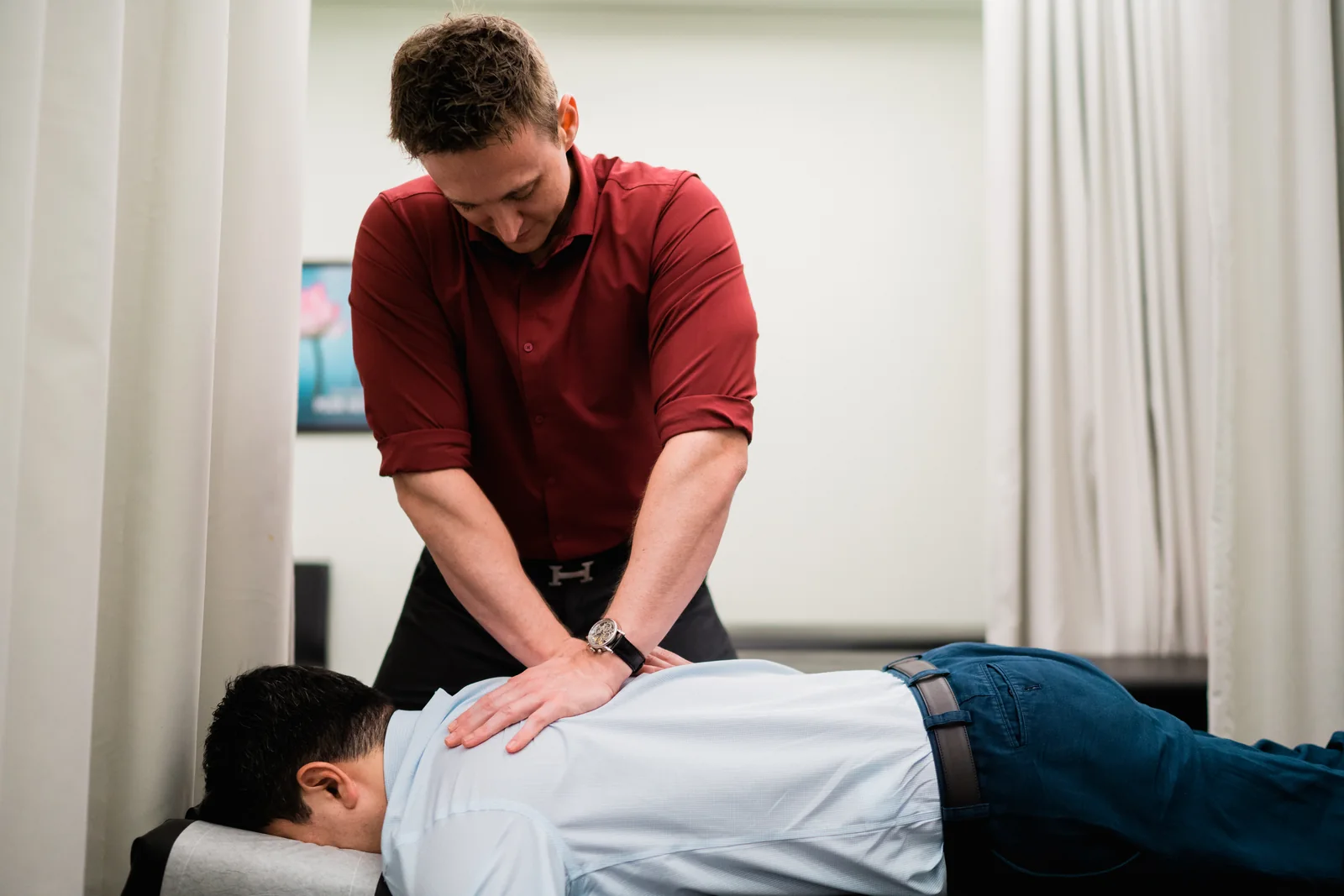
Sacroiliac joint pain is usually felt low on one side of the back, beside the bony lump at the top of the buttock. It tends to bite when you stand up from sitting, climb stairs or turn over in bed. It comes from the joint where the base of the spine meets the pelvis.
Key takeaways
- The sacroiliac joints sit where the sacrum, the bone at the base of the spine, meets the pelvis.
- They move very little, averaging under two degrees of rotation in healthy adults.
- Pain is usually on one side rather than in the midline of the back.
- No single test confirms the diagnosis, so clinicians use a cluster of provocation tests and look for three or more positive results.
- Sacroiliitis, meaning inflammation of the joint, can be a feature of inflammatory arthritis, which needs a medical assessment.
Where are the sacroiliac joints, and what do they do?
You have two sacroiliac joints, one on each side, where the pelvis meets the sacrum of the spine. Their job is structural rather than mobile. They act as a shock absorber and transfer vertical load from the lumbar spine into the legs.
They move far less than most people expect. A study of 24 healthy adults, measured with markers fixed into the bone, found average movement of 1.8 degrees of rotation and 0.7mm of translation in men, and 1.9 degrees and 0.9mm in women. Small amounts matter, because the ligaments around the joint take the strain. About 25 per cent of adults with chronic low back pain have sacroiliac joint dysfunction.
What does SI joint pain feel like?
The pain usually sits at, or just below and inside, the posterior superior iliac spine. That is the bony prominence at the top of the buttock. Clinicians use the Fortin finger test, which asks you to point to the pain with one finger, and it is positive when the spot is within 1cm of that landmark.
Pain is typically on one side, not in the middle of the back, and it can spread into the buttock, outer hip, groin and thigh. The aggravating pattern is often more informative than the location. Stairs, jogging uphill, lying on the painful side, long periods of sitting and turning in bed all provoke it.
What irritates the sacroiliac joint?
Degeneration, meaning ordinary wear in the joint surfaces, is the most common cause, with injury, inflammation, osteoarthritis and ankylosing spondylitis accounting for much of the rest. A sudden onset usually traces back to one event: heavy lifting, a fall onto the buttocks, or a motor vehicle collision.
A gradual onset is more likely to come from repeated weight bearing with shear or twisting forces through the pelvis, as in football, gymnastics and golf. Pregnancy and the months after birth are significant risk windows, because the ligaments stabilising the pelvis carry more load. Women present more often than men.
The provocation tests a clinician uses
No single test confirms sacroiliac joint pain. Used alone, the individual tests have poor sensitivity and specificity. What carries diagnostic weight is a cluster of five provocation tests: Gaenslen, thigh thrust, distraction, compression and sacral thrust. Each loads the joint from a different direction to see whether your familiar pain is reproduced.
The diagnosis is supported when three or more of the five are positive, a threshold with a sensitivity of 94 per cent and a specificity of 78 per cent. Imaging supports rather than confirms. X-rays and MRI do not reliably identify the joint as the source of pain, although they do rule out fracture, infection and tumour.
How sacroiliac pain is told apart from lumbar back pain and sciatica
A lumbar disc pressing on a nerve root produces numbness, tingling, leg weakness or pain radiating down the leg, and those neurological features are the dividing line. Sacroiliac pain can refer into the thigh, but it does not usually come with altered sensation, lost reflexes or weakness. Our article on telling sciatica from a slipped disc goes further.
Lumbar facet joint pain is the other close neighbour. It is more common in older patients and is worse on bending backwards. Facet and disc pain also sit higher and nearer the midline, whereas sacroiliac pain sits lower and to one side. Pain that fits neither picture is covered in our piece on lower back pain that will not go away, and back pain treatment explains the examination that separates the three.
When sacroiliitis needs a medical assessment
Sacroiliitis means inflammation of the sacroiliac joint, and it is not always mechanical. It can be a feature of inflammatory arthritis, particularly ankylosing spondylitis, where the pain improves with exercise but does not improve, or becomes worse, with rest. Stiffness is worst in the morning and at night, may wake you, and the condition usually first develops between 18 and 40 years of age. That pattern deserves a medical assessment rather than conservative care alone, and blood tests including HLA-B27 form part of the work-up.
What you can do yourself, and when to stop
Begin with the loads rather than the exercises. Long periods of sitting or standing, stair-heavy routines and sleeping on the painful side are the usual daily aggravators, and breaking them up often settles the joint. Stretching the iliopsoas at the front of the hip and the piriformis in the buttock is the key teaching point. The abdominals, pelvic floor and gluteals are worth strengthening where they test weak, which a clinician can set out as a personalised rehabilitative exercise programme. During and after pregnancy a pelvic belt may help.
One safety note. Stop and seek an assessment if the pain travels below the knee with numbness, tingling or weakness, or if it follows a fall. The same applies to fever, unexplained weight loss or changes in bowel or bladder control. Do not push through sharp pain, and do not attempt to manipulate your own pelvis.
How it is assessed and treated without surgery or drugs
At Elite Spine Centres the assessment comes before any treatment decision. Clinical history and physical examination lead, including the provocation cluster and a neurological screen. A spinal X-ray adds information where needed, and an MRI is reserved for an unclear diagnosis, surgical consideration, or a patient who is not responding.
The evidence supports a combination rather than one technique. Exercise shows intermediate and long-term benefit, manipulation alone gives short-term benefit, and the two together last longer than exercise alone. Our care is non-invasive and drug-free, and works at the source. A personalised treatment plan may draw on chiropractic adjustment, the Functional Correction Method, myofascial release, sports massage, osteopathy, low-level laser therapy and rehabilitative exercises. Dr. Bryant has led a multidisciplinary clinical team with chiropractic and osteopathic backgrounds since founding the clinic in 2018. The number of sessions is set after assessment.
Speak to the Team at Elite Spine Centres
If low back pain on one side has not settled, an examination will tell you whether the sacroiliac joint, the lumbar spine or a nerve is responsible. Our clinicians will assess the joint and set out a personalised treatment plan. To book a consultation at Parkview Square, a short walk from Bugis MRT, call +65 6904 8400 or message us on WhatsApp at +65 9727 3603.
Frequently Asked Questions
What should you not do with sacroiliac joint pain?
Avoid the loads that reproduce it: long unbroken sitting or standing, repeated stair climbing, twisting under load and heavy lifting.
What does SI joint dysfunction feel like?
Most people describe a deep ache low on one side of the back, near the bony lump at the top of the buttock. It may spread into the buttock, outer hip, groin or thigh.
What sleeping position is best for sacroiliac joint pain?
No single position has been proven best in research. Lying on the affected side is a recognised aggravator, so most people are more comfortable off the painful side, with a pillow between the knees.
Why does it hurt to press on my SI joint?
Pressing loads the joint capsule and the ligaments around it, so irritated structures reproduce your familiar pain. That tenderness is a useful sign, but it is not diagnostic on its own.
Is sacroiliac joint pain common in pregnancy?
Pregnancy and the period after birth are recognised risk windows, because the ligaments stabilising the pelvis carry more load. Care during pregnancy is adapted to the stage you are at.
Sources
- Newman DP, Soto AT. Sacroiliac Joint Dysfunction: Diagnosis and Treatment. American Family Physician, 2022;105(3):239-245. aafp.org
- SingHealth. Sacroiliac Joint Pain. singhealth.com.sg
- Kissling RO, Jacob HA. The mobility of the sacroiliac joint in healthy subjects. Bulletin of the Hospital for Joint Diseases, 1996;54(3):158-164. PubMed 8919124
- NHS. Ankylosing spondylitis: symptoms. nhs.uk
This article is for general information and does not replace a diagnosis from a qualified healthcare professional. Please consult a qualified practitioner about your individual situation.
Speak to a clinician about what is causing your pain.
Your first visit is a 60-minute session with a doctor — a full assessment and your first treatment in the same appointment. We take your clinical history, screen your posture and movement, explain what we find in plain language, and begin treatment if your condition is suitable for our care.