
How to choose a chiropractor in Singapore
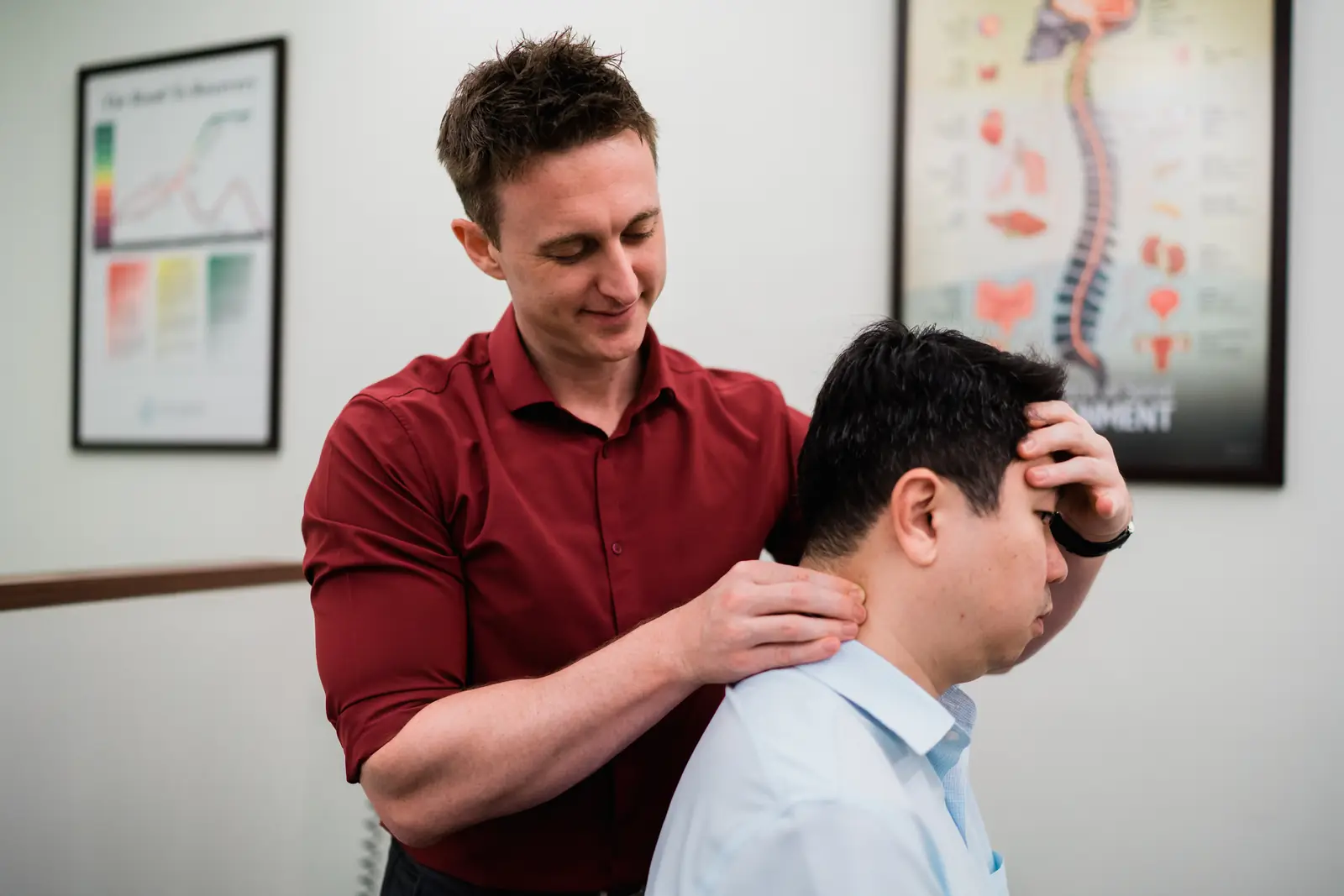
Choosing a chiropractor in Singapore is harder than it should be, because most clinics describe themselves in almost identical terms. Nearly every practice promises to be gentle, holistic and effective, which leaves the person in pain with no real basis for comparison. The decision matters more than the marketing suggests: the right clinician diagnoses the cause of your pain before treating it, while the wrong one treats the symptom and leaves the underlying problem in place.
This guide sets out what actually separates one chiropractor from another, so you can judge a clinic on the things that determine your outcome rather than on how confidently it markets itself.
Key takeaways
- Credentials matter first — confirm the clinician holds a recognised Doctor of Chiropractic qualification and is registered with a professional body.
- A proper assessment comes before any treatment. A clinic that adjusts on the first visit without diagnosing the cause is treating the symptom, not the problem.
- Look for breadth of treatment. A clinic offering only manual adjustment is limited; one that combines chiropractic with rehabilitation and supporting therapies can match the treatment to the condition.
- Chiropractic care in Singapore is a primary healthcare option — no doctor's referral is required to book an assessment.
- Reviews and doctor credentials, read together, are the most reliable public signal of a clinic's competence.
1. Start with the clinician's credentials
Chiropractic is a regulated healthcare discipline, and the qualification behind the title is the first thing to verify. A chiropractor should hold a Doctor of Chiropractic degree from a recognised institution and be a member of a professional association such as the Alliance of Chiropractic (AOC) Singapore or an equivalent overseas body. These qualifications are not decorative; the training covers diagnosis, spinal mechanics and the safe application of force to a specific joint, which is what separates clinical chiropractic from casual manipulation.
Where a clinic lists its clinicians by name with their qualifications and years in practice, you can assess who will actually treat you. Where credentials are vague or absent, that absence is itself information.
2. Insist on assessment before treatment
The single most important marker of a competent clinic is the order in which it works. A proper first visit is a diagnostic one: a history, a physical examination, and where necessary a review of imaging, so the clinician can identify what is driving the pain before applying any treatment. Pain that radiates into a limb, for example, is not treated the same way as pain confined to one joint, and the difference can only be established by assessment.
A clinic that reaches for an adjustment on the first visit, before understanding the cause, is treating the presentation rather than the problem. Structured, drug-free correction begins with a diagnosis, not with a technique.
3. Judge the breadth of treatment on offer
Chiropractic adjustment is a precise, controlled force applied to a specific joint to restore movement and reduce mechanical irritation of the surrounding nerves. It is highly effective for conditions driven by joint restriction, but it is one tool. Many spine and pain problems respond better when the adjustment is combined with other non-invasive therapies — spinal decompression for disc-related conditions, shockwave therapy for stubborn soft-tissue and tendon pain, and rehabilitative exercise to rebuild the stability that protects the correction.
This is where the choice of clinic genuinely affects your outcome. A practice built around a single technique can only offer that technique. A practice that integrates chiropractic with rehabilitation and supporting therapies within one structured plan can match the treatment to the condition, rather than fitting the condition to whatever the clinic happens to do. At Elite Spine Centres, that integration is delivered through the Functional Correction Method, a protocol that combines modern chiropractic, osteopathy, physiotherapeutic technologies and rehabilitation so that the appropriate combination is chosen at assessment rather than assumed in advance.
4. Understand what chiropractic covers
Patients often ask whether they need a chiropractor, an osteopath or a physiotherapist. In practice the disciplines overlap substantially, and a clinic that combines chiropractic with rehabilitation and osteopathic technique addresses much of what each of the others does — spinal and joint correction, soft-tissue work, and the guided exercise that restores function. The more useful question is therefore not which discipline to book, but whether the clinic can assess your problem and apply the right combination of methods. A single, well-diagnosed treatment plan is more reliable than choosing a label before your condition has been examined.
5. Read reviews and credentials together
Online reviews are useful, but volume and consistency matter more than a single high rating. A clinic with several hundred reviews at a consistently high standard is a stronger signal than a handful of perfect scores, because the larger sample is harder to distort. Read reviews for recurring themes — thorough explanation, accurate diagnosis, lasting relief — rather than for individual praise, and read them alongside the clinicians' stated qualifications. Together, credentials and a substantial, consistent review record are the most reliable public evidence of competence.
6. Practical considerations
Chiropractic care in Singapore is a primary healthcare option, which means a doctor's referral is not required to book an assessment. Beyond the clinical factors above, weigh the practical ones: location and accessibility, whether the clinic explains its treatment plan and expected number of sessions clearly, and whether it sets realistic expectations rather than promising an immediate cure. A clinic that is candid about what treatment can and cannot achieve is usually the one worth trusting.
Speak to the Team at Elite Spine Centres
If you are weighing your options, the most useful next step is a proper assessment — a diagnosis of what is actually causing your pain, and a clear explanation of the treatment that would address it. To book a consultation, call +65 6904 8400 or message us on WhatsApp at +65 9727 3603.
Frequently Asked Questions
Do I need a referral to see a chiropractor in Singapore?
No. Chiropractic care is a primary healthcare option in Singapore, so you can book an assessment directly without a doctor's referral.
How do I know if a chiropractor is properly qualified?
Look for a Doctor of Chiropractic qualification from a recognised institution and membership of a professional body such as the Alliance of Chiropractic (AOC) Singapore. Reputable clinics list their clinicians by name with their qualifications and years in practice.
Should I choose a chiropractor, an osteopath or a physiotherapist?
The disciplines overlap considerably. Rather than choosing a label in advance, look for a clinic that can assess your specific problem and apply the right combination of chiropractic, rehabilitation and supporting therapies. A clinic that integrates these methods addresses much of what each discipline does on its own.
How many sessions will I need?
This depends on the condition and its severity, which is why a proper assessment comes first. A competent clinic will explain its expected treatment plan and session count clearly rather than committing you to an open-ended course.
Is chiropractic treatment safe?
When performed by a qualified clinician after a proper diagnosis, chiropractic treatment is a well-tolerated, non-invasive and drug-free approach. The assessment that precedes treatment is what keeps it safe and appropriate to your condition.
Speak to a clinician about what is causing your pain.
Your first visit is a 60-minute session with a doctor — a full assessment and your first treatment in the same appointment. We take your clinical history, screen your posture and movement, explain what we find in plain language, and begin treatment if your condition is suitable for our care.