
Frozen shoulder — symptoms, stages, and non-invasive treatment
Frozen shoulder is one of the more frustrating conditions to live with, because it develops slowly, lingers for months, and often resists the rest and painkillers that people try first. If you have found that raising your arm, reaching behind your back or sleeping on one side has become progressively harder and more painful, you may be dealing with frozen shoulder rather than an ordinary strain.
The condition is treatable without surgery, but it responds best to a structured approach that matches the stage it has reached. Understanding what is happening in the joint is the first step to addressing it.
Key takeaways
- Frozen shoulder, clinically known as adhesive capsulitis, is a stiffening of the shoulder capsule that restricts movement and causes pain.
- It typically progresses through three stages — freezing, frozen and thawing — which can span many months if left unmanaged.
- It rarely resolves quickly on its own, and prolonged rest can allow the stiffness to worsen.
- Non-invasive treatment combines hands-on therapy, targeted modalities such as shockwave therapy, and guided rehabilitation to restore movement.
- Early assessment shortens the course — the sooner the stiffness is addressed, the less range of motion is lost.
What frozen shoulder actually is
Frozen shoulder, or adhesive capsulitis, is a condition in which the capsule of connective tissue surrounding the shoulder joint thickens and tightens. As the capsule contracts, the joint loses its normal range of movement and becomes painful, particularly at the limits of motion. The cause is not always clear, but it occurs more frequently after a period of immobility — following an injury, surgery or an unrelated condition that kept the arm still — and is more common in certain groups, including people with diabetes. A 2016 meta-analysis found that people with diabetes were about five times as likely as people without diabetes to have frozen shoulder, which affected an estimated 13.4% of people with diabetes (Zreik et al., Muscles, Ligaments and Tendons Journal, 2016).
The three stages
Frozen shoulder generally moves through three phases. In the freezing stage, pain increases and movement begins to reduce. In the frozen stage, pain may ease somewhat, but stiffness dominates and the shoulder is at its most restricted. In the thawing stage, movement gradually returns. Left unmanaged, this sequence can take a long time to complete, which is why treatment aims to shorten it rather than wait it out.
Why rest alone is not the answer
Because the pain discourages movement, the natural response is to rest the shoulder — but prolonged immobility can allow the capsule to tighten further, deepening the stiffness. The more effective approach is guided, controlled movement combined with treatment that reduces pain and restores mobility, so the joint is kept working within its tolerance rather than allowed to seize.
How frozen shoulder is treated without surgery
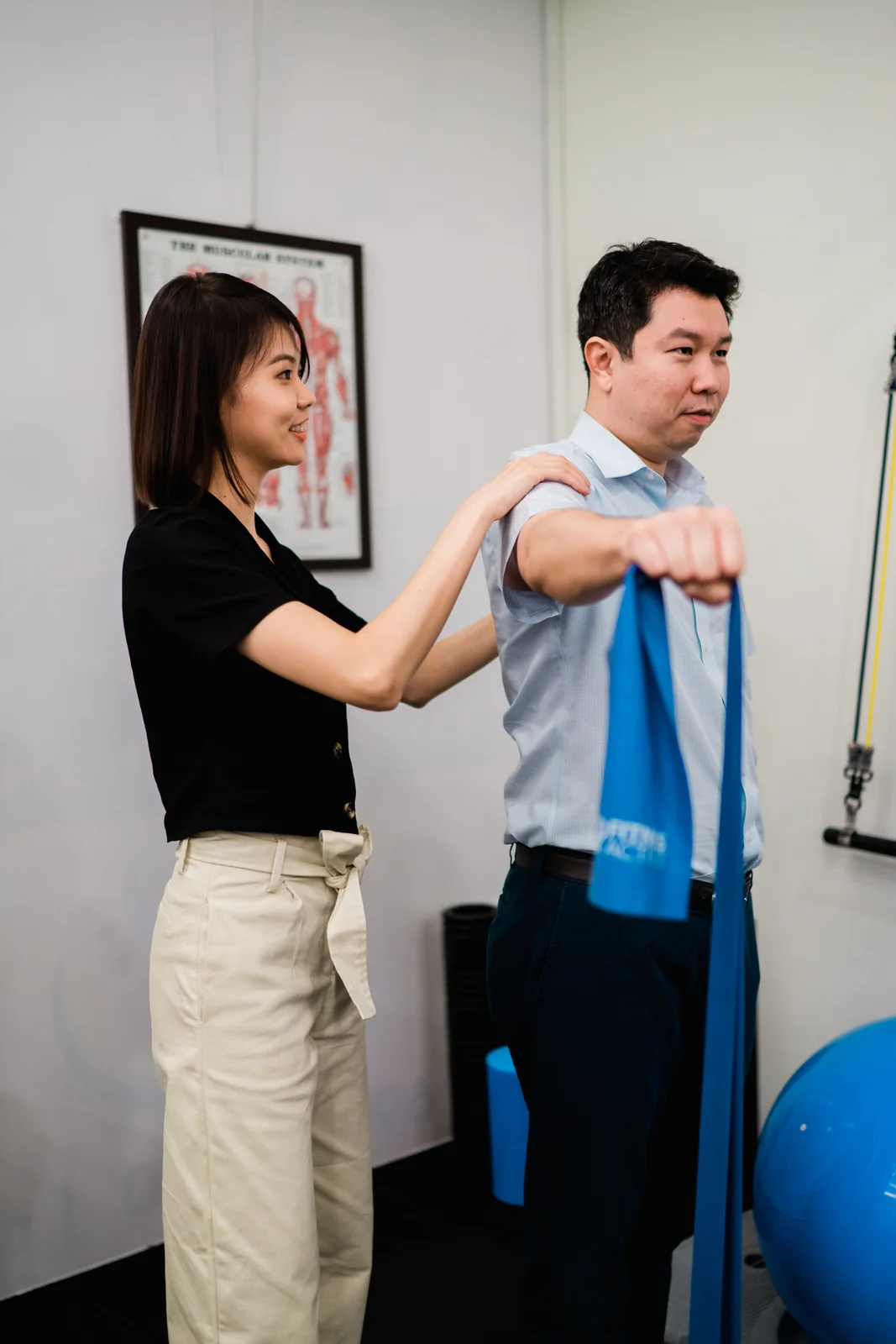
Non-invasive treatment addresses both the pain and the underlying restriction. Hands-on therapy and joint mobilisation work to restore movement in the capsule and surrounding tissue. Shockwave therapy, which applies focused pressure waves to stimulate the body's natural healing process in stubborn soft tissue, can help resolve the persistent tightness that resists other approaches. Rehabilitative exercise then rebuilds the strength and range of motion that protect the recovery. Delivered together in a structured plan rather than in isolation, these methods are well-tolerated and aim for long-lasting return of function without medication or a procedure.
When to seek help
If shoulder stiffness has been building for several weeks, is interfering with sleep or daily tasks, or is not improving with rest, it is worth having it assessed. Early treatment generally means a shorter course and less loss of movement, whereas a shoulder left to stiffen for months is harder and slower to recover.
Speak to the Team at Elite Spine Centres
If your shoulder has become stiff and painful, a proper assessment will establish which stage the condition has reached and the treatment that would address it. To book a consultation, call +65 6904 8400 or message us on WhatsApp at +65 9727 3603.
Frequently Asked Questions
How long does frozen shoulder last?
Left unmanaged, frozen shoulder can persist for many months as it moves through its freezing, frozen and thawing stages. Structured treatment aims to shorten this course and preserve movement rather than waiting for it to resolve on its own.
Can frozen shoulder be treated without surgery?
Yes. Most cases respond to non-invasive treatment that combines hands-on therapy, modalities such as shockwave therapy, and guided rehabilitation. Surgery is generally considered only when conservative treatment has been exhausted.
Should I rest a frozen shoulder?
Complete rest can allow the capsule to tighten further and worsen the stiffness. Controlled, guided movement combined with treatment is more effective than immobilising the shoulder.
Is frozen shoulder the same as a rotator cuff injury?
No. Frozen shoulder is a stiffening of the joint capsule, whereas a rotator cuff injury involves the tendons and muscles that stabilise the shoulder. The symptoms can overlap, which is why an assessment is needed to distinguish them and treat the correct problem.
Speak to a clinician about what is causing your pain.
Your first visit is a 60-minute session with a doctor — a full assessment and your first treatment in the same appointment. We take your clinical history, screen your posture and movement, explain what we find in plain language, and begin treatment if your condition is suitable for our care.