
Chiropractor vs osteopath in Singapore — which is right for you?
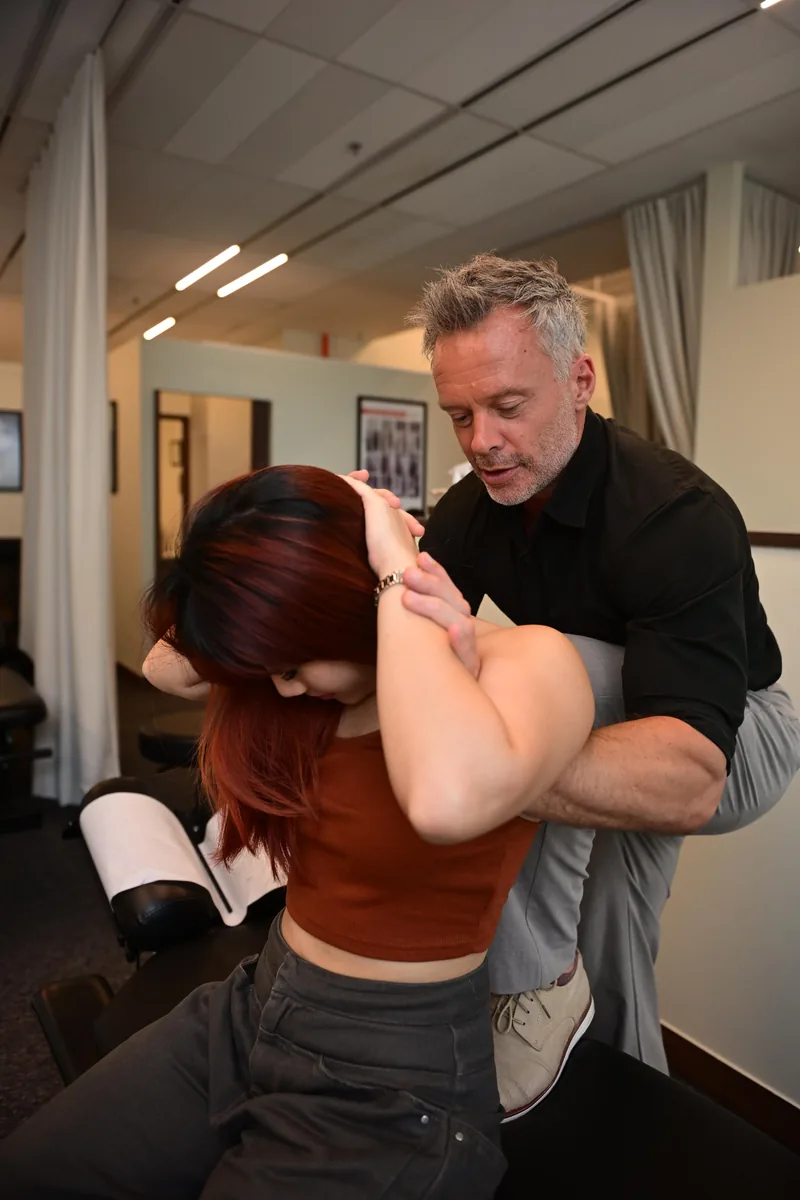
Deciding between a chiropractor and an osteopath is harder in Singapore than in many other countries, and for a simple reason: osteopathy is rare here. Most manual-therapy clinics offer chiropractic only — and often a fairly narrow form of it, built around the spinal adjustment and little else. So the decision is usually made for the patient by whatever is available rather than by what actually suits their condition. Both disciplines are recognised, non-invasive and drug-free, and they overlap in much of what they treat — but they differ in scope, and that difference matters when your pain has been resistant to previous treatment or involves more than one part of the body.
There is a second thing worth understanding before you choose, because it changes the question entirely. The narrow, adjustment-only version of chiropractic is not the only version. Practised at its full range — combining manual adjustment with soft tissue work, mobilisation, physiotherapeutic technology and rehabilitation — chiropractic can operate at much the same breadth as osteopathy. That is how it is delivered at Elite Spine Centres, where chiropractic and osteopathy are integrated into a single method rather than offered as competing options. So the real choice for most patients is not chiropractic or osteopathy. It is between a basic single-technique clinic and a wide-scope hybrid model that gives you both.
Key takeaways
- Basic chiropractic, as practised at most clinics, focuses narrowly on the spine and nervous system with spinal adjustment as its signature technique
- Osteopathy takes a whole-body view, considering how musculoskeletal restriction affects circulation, the nervous system and other body systems — a wider remit than basic chiropractic
- Chiropractic practised at its full range — adjustment plus soft tissue work, mobilisation, physiotherapeutic technology and rehabilitation — reaches much the same breadth as osteopathy
- Both disciplines are non-invasive, drug-free manual therapies, and for many conditions they are complementary rather than competing
- Elite Spine Centres runs a chiropractic-osteopathic hybrid model: on-staff Doctors of Chiropractic and an on-staff Doctor of Osteopathy, delivering both within the Functional Correction Method (FCM)
- Because both disciplines sit inside one method, the choice is made clinically at assessment — you get the best of both rather than being limited to whatever one technique a single-discipline clinic can offer
What Is Chiropractic Care?
Chiropractic is a conservative, drug-free healthcare discipline concerned with diagnosing and correcting disorders of the spine, joints, muscles and nervous system. Its defining technique is the chiropractic adjustment — a precise, controlled force applied to a specific spinal joint to restore movement, reduce mechanical nerve irritation and improve alignment. Alongside adjustment, chiropractic care typically includes soft tissue therapy and postural correction.
The emphasis is on restoring normal joint mechanics — particularly in the spine — so that the surrounding structures are no longer irritated or compensating. This makes chiropractic well suited to conditions driven by joint restriction and disc compression: recurring lower back pain, neck pain, sciatica, and pain that radiates from the spine into a limb. In Singapore, chiropractors are primary healthcare providers, which means a doctor's referral is not required to book an assessment.
It is worth drawing a distinction here, because it is the crux of the decision. At most clinics chiropractic is practised narrowly — the adjustment is effectively the whole treatment. But the discipline itself is broader than that. Practised at its full scope, chiropractic combines the adjustment with soft tissue therapy, joint mobilisation, physiotherapeutic technologies and structured rehabilitation, addressing the whole movement chain rather than a single joint. This fuller version overlaps heavily with what an osteopath does — and it is this version, integrated with osteopathy, that Elite Spine Centres delivers. When we refer to "basic chiropractic" below, we mean the narrow single-technique form; it is not the only way the discipline can be practised.
What Is Osteopathy?
Osteopathy is a whole-body manual therapy that treats the body as a single interconnected unit. Where chiropractic concentrates on the spine and nervous system, osteopathy considers how structural restriction in the musculoskeletal system can affect circulation, nervous system function, digestion and respiration — and it factors in lifestyle, previous injuries and general health as contributing influences. The osteopath uses their hands to identify areas of restriction, tension or imbalance, then applies techniques to restore proper movement and function.
Those techniques include soft tissue work, joint mobilisation and structural realignment, and they tend to be applied across a wider area of the body than a focused spinal adjustment. The broader scope is deliberate: osteopathy is often the more useful starting point for patients whose presenting complaint appears connected to other systems, or whose pain has not resolved with a spine-focused approach alone.
Chiropractic vs Osteopathy: The Key Differences
The two disciplines share a great deal. Both are non-invasive, both are drug-free, and both rely on skilled, hands-on manual therapy. The clearest differences are in their scope and in their signature techniques. The comparison below sets basic chiropractic — the narrow, adjustment-led form offered at most single-discipline clinics — against osteopathy, so the genuine differences are visible.
| Basic chiropractic | Osteopathy | |
|---|---|---|
| Primary focus | Spine, joints and nervous system | Whole-body structural function |
| Signature technique | Spinal adjustment (manipulation) | Soft tissue work, joint mobilisation, structural realignment |
| Scope | Focused on the spine and specific joints | Wider — considers circulation, nervous, digestive and respiratory function |
| Common applications | Joint restriction, disc-related pain, sciatica, postural pain | Persistent pain, limited mobility, pain interacting with other body systems |
| Availability in Singapore | Multiple clinics | Rare — few clinics have an on-staff Doctor of Osteopathy |
| Non-invasive | Yes | Yes |
| Drug-free | Yes | Yes |
These distinctions are matters of emphasis rather than hard boundaries. Many chiropractors incorporate soft tissue and mobilisation techniques, and osteopaths regularly treat the same spinal complaints that bring patients to a chiropractor. The overlap is genuine, which is part of why the choice between them is rarely as clear-cut as it first appears.
There is also a column the table cannot show, because it is not a third discipline — it is what happens when the two are combined. A full-scope chiropractic-osteopathic model spans both columns at once: the targeted spinal correction of chiropractic and the whole-body structural range of osteopathy, applied together within a single plan. That is the model Elite Spine Centres runs, and it is why the practical decision is less "chiropractic or osteopathy" than "a basic single-technique clinic or a hybrid that already includes both."
How to Decide Which Is Right for You
There is no single answer that applies to everyone, but the nature of your problem is a useful guide. A condition that is clearly mechanical and spine-centred — recurring lower back pain from joint restriction, neck stiffness, sciatica, or disc-related pain radiating into a limb — often responds well to chiropractic care, where a targeted adjustment restores movement at the source of the irritation.
Osteopathy tends to be the more useful starting point in three situations. The first is when you have already tried chiropractic or other focused treatment without lasting improvement, and a wider structural view may reveal contributing factors elsewhere in the body. The second is when your pain appears to interact with other systems — for example, chronic shoulder or rib discomfort that changes with your breathing pattern, or long-standing tension that has never been traced to a single joint. The third is when your history includes older injuries or compensations that have accumulated across the body over years rather than sitting in one region.
In practice, the line is rarely clean, and many conditions benefit from elements of both. This is precisely where the basic single-technique clinic falls short: when the adjustment is the whole toolkit, the assessment is bounded by what that one technique can deliver, and anything outside it is either referred elsewhere or simply missed. A hybrid model removes that ceiling. With chiropractic at its full range and osteopathy both on hand and integrated, the treatment is matched to the condition rather than to the clinic's single specialty — and you are not asked to pick a discipline before anyone has examined you.
The Best of Both: The Elite Spine Hybrid Model
Osteopathy is uncommon in Singapore, and clinics that combine it with chiropractic practised at full depth are rarer still. Elite Spine Centres does exactly that. The clinic's Doctors of Chiropractic work alongside an on-staff Doctor of Osteopathy — Dr. Marcus Bernini, Doctor of Osteopathy (London School of Osteopathy, United Kingdom) — and the two disciplines are run as one integrated model rather than two services under the same roof. Dr. Bernini brings more than fifteen years of clinical practice and a background as a former professional rugby player, which is directly relevant to the kinetic-chain injuries that athletes and active patients accumulate.
The result is genuinely the best of both worlds: the precise, targeted spinal correction that chiropractic is known for, combined with the whole-body structural range of osteopathy — neither one diluted, both available in the same plan. Compared with a basic clinic where the adjustment is the entire offering, this is a materially wider set of interventions applied to the same problem. And because it is one model, a single consultation determines whether chiropractic, osteopathy, or a combination is the appropriate path, without the patient committing to two separate clinics or coordinating two separate practitioners. Where most patients elsewhere are effectively choosing a discipline — and a narrow one — before their condition has been assessed, at Elite Spine the assessment comes first and the treatment follows from it. You can read more about osteopathy in Singapore at Elite Spine Centres and how Dr. Bernini practises it.
How the Functional Correction Method Integrates Both
The integration is not informal. Elite Spine Centres delivers care through the Functional Correction Method (FCM), a proprietary protocol developed by the clinic's founder that combines modern chiropractic, osteopathy, physiotherapeutic technologies, rehabilitative exercises and lifestyle guidance within one structured plan. FCM is built on a simple clinical thesis: most chronic pain is the result of compensation patterns that develop when one part of the body's kinetic chain is dysfunctional, and durable correction requires addressing the whole chain rather than only the painful joint or the tight muscle in isolation.
FCM is sequenced across three phases. In the assessment phase, the clinician identifies the compensation patterns and root cause driving the pain — not simply where it presents. In the correction phase, the appropriate combination of techniques is applied, which may draw on chiropractic adjustment, osteopathic soft tissue and mobilisation work, and, where indicated, advanced therapies such as spinal decompression for disc-related conditions. In the reinforcement phase, rehabilitative exercises rebuild the strength and stability that protect the correction and reduce the likelihood of recurrence. Because chiropractic and osteopathic techniques both sit inside this single framework, the decision about which to use — and in what combination — is a clinical one made during assessment, not a decision the patient has to make before their first visit. You can read more about the method on the Functional Correction Method page.
Speak to the Team at Elite Spine Centres
If you are unsure whether chiropractic care, osteopathy, or a combination of both is right for your condition, the team at Elite Spine Centres can carry out a thorough assessment and recommend the most appropriate approach. Give us a call on +65 6904 8400 or WhatsApp us on +65 9727 3603 to book a consultation.
Frequently Asked Questions
Is a chiropractor or osteopath better in Singapore?
Neither is universally better — the appropriate choice depends on your condition. Mechanical, spine-centred problems such as joint restriction, disc-related pain and sciatica often respond well to chiropractic adjustment. Pain that has not resolved with focused treatment, or that appears connected to other body systems, may be better suited to osteopathy's whole-body approach. The more useful question is often not which one, but whether you have access to both. A hybrid clinic that runs chiropractic at full range alongside osteopathy lets the decision be made clinically at assessment, so you are not limited to a single technique or forced to choose before you have been examined.
What is the main difference between chiropractic and osteopathy?
The clearest difference is scope, but it depends on how chiropractic is practised. In its narrow, adjustment-led form — the version offered at most single-discipline clinics — chiropractic focuses on the spine, joints and nervous system, while osteopathy takes a whole-body view across a broader range of techniques. Practised at its full range, however, chiropractic adds soft tissue work, mobilisation, physiotherapeutic technology and rehabilitation, and overlaps heavily with osteopathy. Both are non-invasive, drug-free and manual, so when the two are combined — as they are within Elite Spine's Functional Correction Method — the distinction matters less than the fact that both scopes are covered in one plan.
Can I see a chiropractor and an osteopath at the same time?
Yes, and for many conditions the two approaches complement each other. At Elite Spine Centres, both disciplines are integrated within a single treatment plan through the Functional Correction Method, which means they are sequenced deliberately rather than delivered as separate, uncoordinated appointments. A single assessment establishes which combination is appropriate, removing the need to arrange and align two separate practitioners.
Is osteopathy available in Singapore?
Osteopathy is available in Singapore but it is uncommon, and few chiropractic clinics have an on-staff Doctor of Osteopathy. Elite Spine Centres offers osteopathy delivered by a United Kingdom-trained Doctor of Osteopathy, alongside its chiropractic care. This gives patients access to osteopathic treatment within an integrated clinical framework rather than having to seek out a rare standalone osteopathic practice.
Do I need a referral to see a chiropractor or osteopath?
No. Chiropractors are primary healthcare providers in Singapore, so a doctor's referral is not required to book an assessment, and you can arrange an initial consultation directly. The consultation includes a full history and examination to identify the cause of your pain and to determine whether chiropractic, osteopathy or a combination is the appropriate approach before any treatment plan is designed.
Speak to a clinician about what is causing your pain.
Your first visit is a 60-minute session with a doctor — a full assessment and your first treatment in the same appointment. We take your clinical history, screen your posture and movement, explain what we find in plain language, and begin treatment if your condition is suitable for our care.