
Chiropractic for scoliosis — non-surgical management, explained
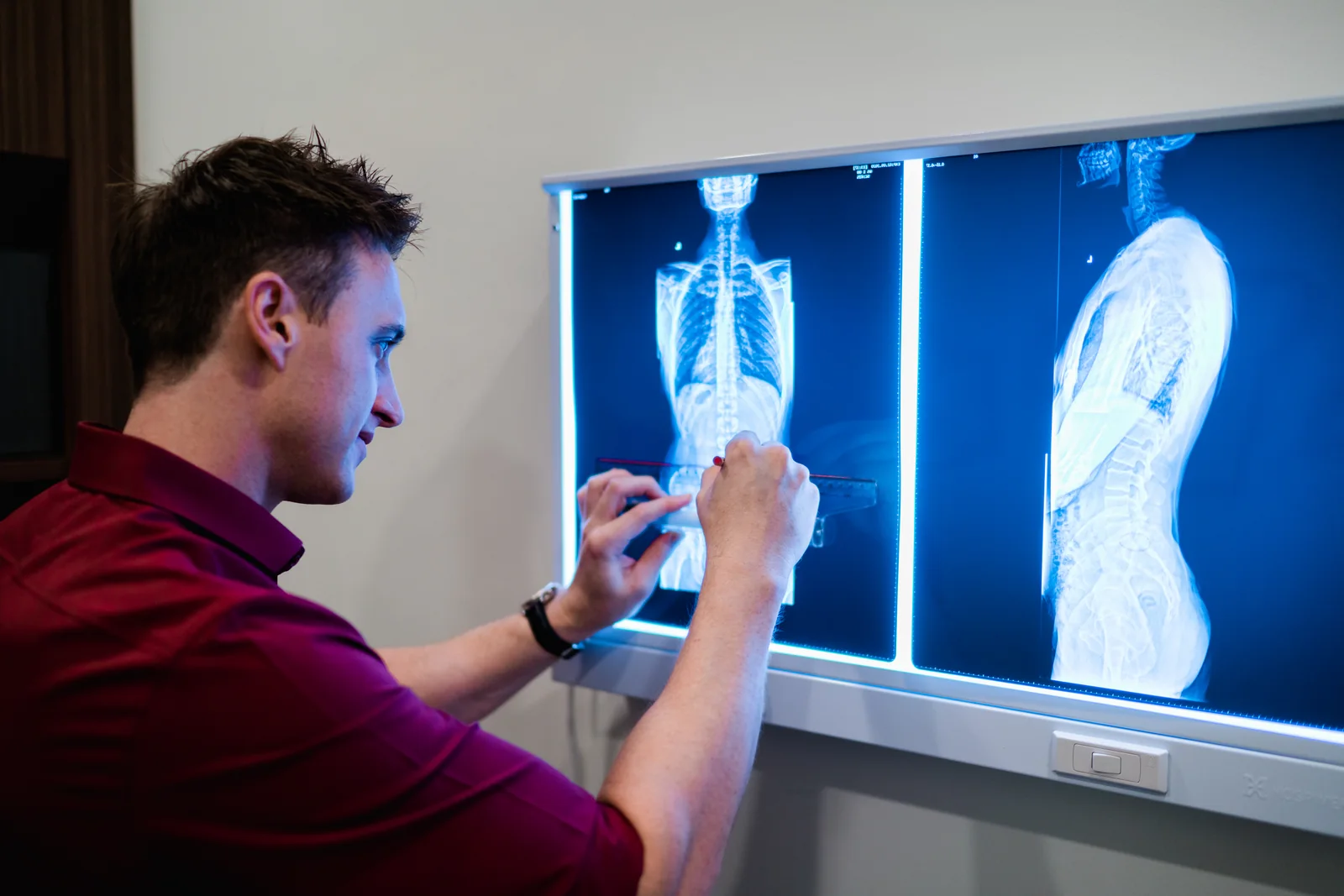
Scoliosis is a sideways curvature of the spine, and for many people the most difficult part of living with it is uncertainty — about whether it will worsen, whether it will cause pain, and what can be done short of surgery. Chiropractic and rehabilitation cannot straighten a curved spine, and any clinic that claims otherwise should be treated with caution. What conservative care can do is manage the condition: reduce the pain and stiffness it causes, improve posture and function, and support the surrounding structures so daily life is more comfortable.
Understanding what scoliosis is, and what realistic management looks like, is the starting point for making a sensible decision about treatment.
Key takeaways
- Scoliosis is a sideways curvature of the spine, measured by the degree of the curve known as the Cobb angle.
- Conservative care does not correct the curve, but it can reduce associated pain, stiffness and postural strain.
- Management combines hands-on treatment to ease restriction with rehabilitative exercise to strengthen the supporting muscles.
- Severe or rapidly progressing curves require medical or surgical oversight — conservative care complements that management, it does not replace it.
- An assessment establishes the type and degree of the curve and whether conservative treatment is appropriate.
What scoliosis is
Scoliosis is a condition in which the spine curves sideways, often taking a C-shaped or S-shaped form when viewed from behind. The degree of the curve is measured on imaging as the Cobb angle, which allows a curve to be classified and monitored over time. Scoliosis can appear in adolescence, when it is most commonly identified, or in adulthood, where it may be a long-standing curve that has begun to cause symptoms or a curve that has developed later through degenerative changes in the spine.
What conservative care can and cannot do
It is important to be clear about expectations. Chiropractic adjustment and rehabilitation do not straighten a scoliotic spine, and the honest goal of conservative care is management rather than correction. Within that goal, however, there is a great deal that can help. A curved spine places uneven load on the joints and muscles around it, which produces pain, stiffness and fatigue; treatment that restores movement to the restricted areas and strengthens the supporting muscles can reduce that strain and improve day-to-day comfort and function. For many people with mild to moderate curves, this is the difference between a spine that aches through the day and one that does not.
How scoliosis is managed conservatively
Conservative management works on two fronts. Hands-on treatment addresses the joint restriction and muscular tension that build up around the curve, easing the stiffness and discomfort these cause. Rehabilitative exercise then strengthens the muscles that support the spine and improves postural control, which helps the body carry the curve with less strain. Delivered together in a structured, individualised plan rather than as isolated techniques, this approach aims to keep the spine mobile, the surrounding muscles strong, and the person comfortable and active.
When medical or surgical oversight is needed
Not every curve is suited to conservative care alone. Severe curves, and curves that are progressing rapidly — particularly in a growing adolescent — require medical monitoring and may need bracing or, in some cases, surgical assessment. Responsible conservative care recognises this boundary. Its role in these cases is to complement medical management by addressing pain and function, not to substitute for it. This is precisely why an assessment, including imaging to establish the degree and behaviour of the curve, comes before any treatment.
Speak to the Team at Elite Spine Centres
If you or your child has been diagnosed with scoliosis, or you suspect a curve, a proper assessment will establish its type and degree and whether conservative treatment is appropriate for managing it. To book a consultation, call +65 6904 8400 or message us on WhatsApp at +65 9727 3603.
Frequently Asked Questions
Can a chiropractor cure scoliosis?
No. Chiropractic care cannot straighten a scoliotic spine, and any claim to cure scoliosis should be treated with caution. What conservative treatment can do is manage the condition — reducing the pain, stiffness and postural strain it causes, and improving function.
Is chiropractic treatment safe for scoliosis?
When applied by a qualified clinician after a proper assessment, conservative treatment for scoliosis is non-invasive and well-tolerated. The assessment, including imaging where needed, is what ensures the treatment is appropriate to the type and degree of the curve.
Does scoliosis always get worse?
Not necessarily. Many mild curves remain stable, while others, particularly in growing adolescents, can progress. This is why curves are assessed and monitored over time, so that the right level of management can be applied.
Can adults with scoliosis be treated?
Yes. Adults frequently seek treatment for the pain and stiffness associated with a long-standing or degenerative curve. Conservative care can help manage these symptoms and support function, as part of an individualised plan.
Speak to a clinician about what is causing your pain.
Your first visit is a 60-minute session with a doctor — a full assessment and your first treatment in the same appointment. We take your clinical history, screen your posture and movement, explain what we find in plain language, and begin treatment if your condition is suitable for our care.