
Chiropractor During Pregnancy: Is It Safe, and What Can It Help With?
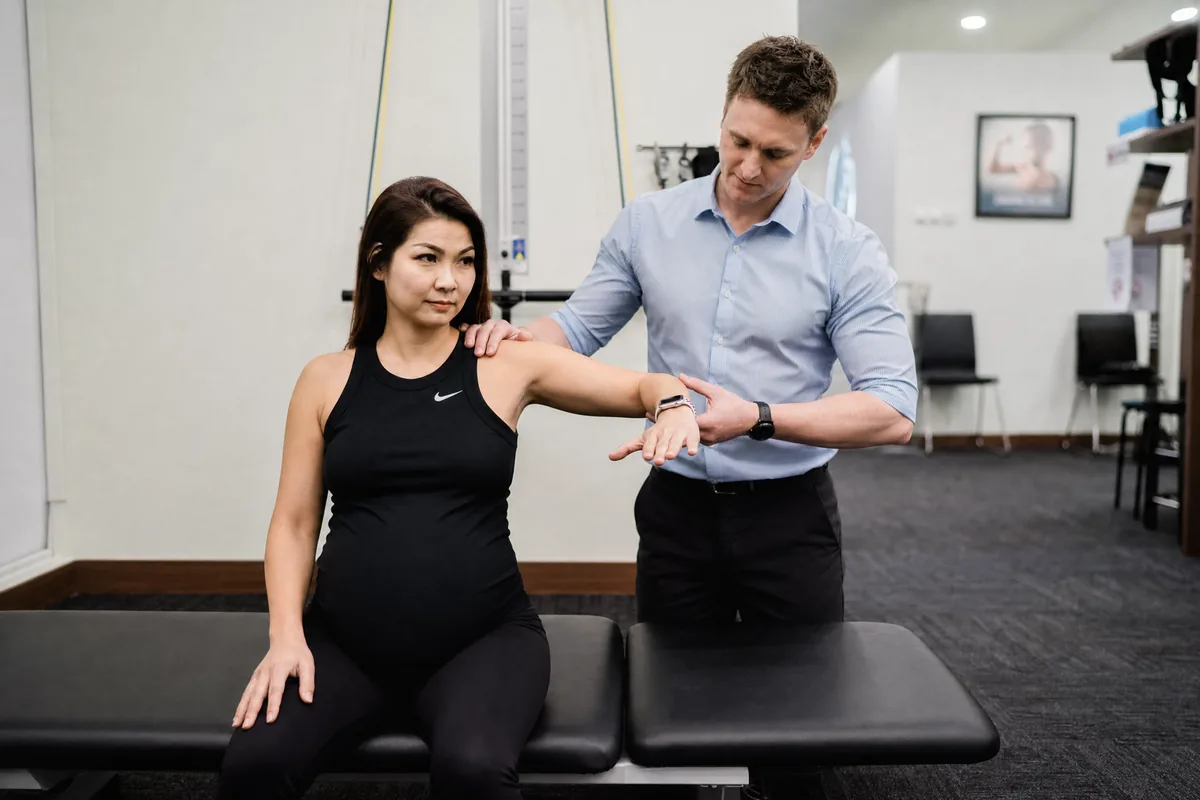
For most women with an uncomplicated pregnancy, seeing a qualified chiropractor for back or pelvic pain is a reasonable, drug-free option, provided the chiropractor adapts their techniques to pregnancy. Back and pelvic pain are very common: a Cochrane review reports that more than two-thirds of pregnant women experience low back pain and almost one-fifth experience pelvic pain, and that both tend to increase as pregnancy advances (Liddle and Pennick, Cochrane Database of Systematic Reviews, 2015).
Because many pain medicines are not recommended in pregnancy, it is understandable that expectant mothers look for other ways to stay comfortable. This guide explains what the evidence says, how chiropractic care is adapted for pregnancy, and the situations in which you should speak to your doctor first.
Key takeaways
- More than two-thirds of pregnant women experience low back pain, and almost one-fifth experience pelvic pain.
- Chiropractic care in pregnancy uses reduced force, a pregnancy pillow and supported positions, and no pressure on the abdomen.
- Research on manual therapy in pregnancy is limited but generally favourable, and reported side effects have been minor and short-lived.
- An uncomplicated pregnancy does not need your obstetrician's clearance first. If your pregnancy has complications, speak to your obstetrician before starting.
- Bleeding, severe abdominal pain, fever, or loss of feeling in the legs or pelvic area need urgent medical care, not a chiropractor.
Why does pregnancy cause back and pelvic pain?
Pregnancy changes both the load on the spine and the joints that carry it. The NHS explains that ligaments naturally become softer and stretch to prepare the body for labour, which can strain the joints of the lower back and pelvis (NHS). At the same time, the growing abdomen shifts the centre of gravity forward. The curve of the lower back deepens to compensate, and the muscles and joints of the lower back work harder with every step.
Pain in pregnancy usually has more than one contributor. Looser pelvic ligaments, a deeper lower back curve, tired back muscles and changes in how you walk often combine, which is why the pattern of pain changes as the pregnancy progresses:
- First trimester: hormonal changes begin, and some women notice back or neck tension, particularly with nausea.
- Second trimester: lower back pain becomes more common as the centre of gravity shifts and weight increases.
- Third trimester: pelvic pain and sciatica-type leg pain are common as the pelvic ligaments loosen further and the baby grows.
Pelvic girdle pain (PGP), sometimes called symphysis pubis dysfunction, is a specific pattern. The NHS describes it as pain over the pubic bone, across the lower back, or spreading to the thighs, often worse when walking, climbing stairs, standing on one leg or turning over in bed. It notes that PGP is not harmful to the baby, but it can be painful and make it hard to get around (NHS).
Is it safe to see a chiropractor during pregnancy?
For an uncomplicated pregnancy, chiropractic care delivered by a clinician trained in prenatal techniques is generally considered appropriate. In the Cochrane review of 34 trials involving 5,121 pregnant women, adverse effects, when reported, were minor and transient (Liddle and Pennick, 2015).
Some situations need your obstetrician's input before any manual therapy. These include vaginal bleeding, pre-eclampsia, placenta praevia and any pregnancy your doctor has described as high risk. Chiropractic care in pregnancy is there to help with the musculoskeletal side of pregnancy; it works alongside obstetric care, never in place of it. At Elite Spine Centres, an uncomplicated pregnancy does not need clearance from your obstetrician. If there are unusual or complicating factors, we ask that you check with your obstetrician first.
Symptoms that need a doctor, not a chiropractor
The NHS advises contacting your doctor or midwife urgently if back pain in the second or third trimester could be a sign of early labour, or if back pain comes with fever, vaginal bleeding or pain when passing urine. It advises emergency care if back pain comes with loss of feeling in one or both legs, the buttocks or the genitals (NHS). Severe abdominal pain, a persistent severe headache or sudden swelling of the face, hands or feet also need prompt medical assessment. In Singapore, call 995 in an emergency.
What does the research say about chiropractic care in pregnancy?
The evidence base is modest but generally positive. A 2020 systematic review of 50 studies on chiropractic care options for pregnancy-related low back and pelvic girdle pain concluded that, although conclusive evidence is lacking, many of the interventions studied have moderate or unclear but favourable evidence (Weis et al., Journal of Manipulative and Physiological Therapeutics, 2020).
The Cochrane review found low-quality evidence that exercise can reduce pregnancy-related low back pain, and evidence from individual studies suggesting that osteomanipulative therapy, or a multimodal approach combining manual therapy, exercise and education, may also help (Liddle and Pennick, 2015). This supports a combined approach rather than relying on any single technique.
An honest summary is that chiropractic care is one reasonable, well-tolerated option for pregnancy back and pelvic pain, particularly when it is combined with exercise and practical advice, but it is not a guaranteed fix, and the research is not yet strong enough to say more than that.
How is chiropractic care adapted for pregnancy?
Treatment during pregnancy is modified in several ways to account for looser ligaments and a growing abdomen. At Elite Spine Centres, pregnancy chiropractic care includes:
- Reduced force. Because pregnancy hormones make joints more mobile, adjustments are gentler than standard adjustments, and low-force mobilisation is often used instead.
- Adapted positioning. Techniques and positions change as the pregnancy progresses. A pregnancy pillow lets you lie face-down without pressure on the abdomen, and other support cushions or side-lying positions are used depending on the technique.
- Soft-tissue therapy for tight muscles in the lower back, hips and buttocks.
- Exercise and advice on posture, lifting, sleeping positions and staying active, reflecting the evidence that exercise helps.
Some treatments are not used during pregnancy. Spinal decompression of the lower back, for example, is not used in pregnancy, although decompression of the neck can still be used. The treatment plan is reviewed as the pregnancy progresses, because what is comfortable at 16 weeks may not be at 34 weeks.
What is the Webster Technique?
The Webster Technique is a specific chiropractic analysis and adjustment protocol for pregnancy that focuses on the alignment of the sacrum (the triangular bone at the base of the spine) and the balance of the pelvis. By reducing tension in the pelvic joints and the surrounding muscles and ligaments, it aims to ease pelvic pain and improve comfort. At Elite Spine Centres, clinicians use Webster Technique methods, along with other techniques, where they are indicated.
It is worth being clear about what the Webster Technique does not do. It is sometimes marketed as a way to "turn" a breech baby. It does not directly turn the baby, and it should not be presented as a treatment for breech position; decisions about breech presentation belong with your obstetrician.
Can a chiropractor help after the baby is born?
Many women find that back, neck and pelvic discomfort continue after birth, when feeding, lifting and carrying a baby add new strain while the body recovers. Postnatal chiropractic care focuses on restoring movement, easing upper back and neck tension from feeding positions, and rebuilding strength gradually. Pelvic floor concerns are referred to a pelvic floor specialist where appropriate. Most women can start postnatal care within one to two weeks of giving birth. After a caesarean section it is usually a little longer, depending on how the wound is healing and how mobile you are.
If leg pain is part of the picture, our guide to sciatica versus a slipped disc explains the difference, and our back pain page covers the wider range of causes.
Speak to the Team at Elite Spine Centres
If back or pelvic pain is affecting your pregnancy, the team at Elite Spine Centres can assess the cause and explain a gentle, adapted treatment plan. To book a consultation, call +65 6904 8400 or message us on WhatsApp at +65 9727 3603.
Frequently Asked Questions
When should you stop seeing a chiropractor during pregnancy?
There is no fixed cut-off for an uncomplicated pregnancy, and care can continue into the third trimester with adapted positioning. Stop and speak to your obstetrician if you develop bleeding, pain that feels different from usual, signs of labour, or any new complication.
Can chiropractic adjustments hurt the baby?
Prenatal chiropractic care avoids pressure on the abdomen and uses reduced force. In the Cochrane review of pregnancy back and pelvic pain treatments, reported side effects were minor and transient. If your pregnancy has complications, check with your obstetrician before starting manual therapy.
Which trimester is best to start chiropractic care?
Care can begin in any trimester. Many women first seek help in the second or third trimester, when lower back pain, pelvic pain and sciatica-type symptoms become more common. Starting when pain first appears allows a gentler, earlier plan.
Does the Webster Technique turn a breech baby?
No. The Webster Technique focuses on pelvic balance and comfort. It is not a treatment for breech presentation, and decisions about a breech baby should be made with your obstetrician.
What else helps back pain in pregnancy?
The NHS suggests bending your knees and keeping your back straight when lifting, avoiding heavy lifting, wearing flat shoes, supporting your back when sitting and using a supportive mattress. Regular exercise is also supported by the research.
Sources
- Liddle SD, Pennick V. Interventions for preventing and treating low-back and pelvic pain during pregnancy. Cochrane Database of Systematic Reviews, 2015. PubMed 26422811
- Weis CA et al. Chiropractic care for adults with pregnancy-related low back, pelvic girdle pain, or combination pain: a systematic review. Journal of Manipulative and Physiological Therapeutics, 2020. PubMed 32900544
- NHS. Back pain in pregnancy. nhs.uk
- NHS. Pelvic pain in pregnancy. nhs.uk
This article is for general information and does not replace advice from your obstetrician or another qualified healthcare professional. Please consult a qualified practitioner about your individual pregnancy.
Speak to a clinician about what is causing your pain.
Your first visit is a 60-minute session with a doctor — a full assessment and your first treatment in the same appointment. We take your clinical history, screen your posture and movement, explain what we find in plain language, and begin treatment if your condition is suitable for our care.