
What Is Carpal Tunnel Syndrome, and What Can Be Done Without Surgery?
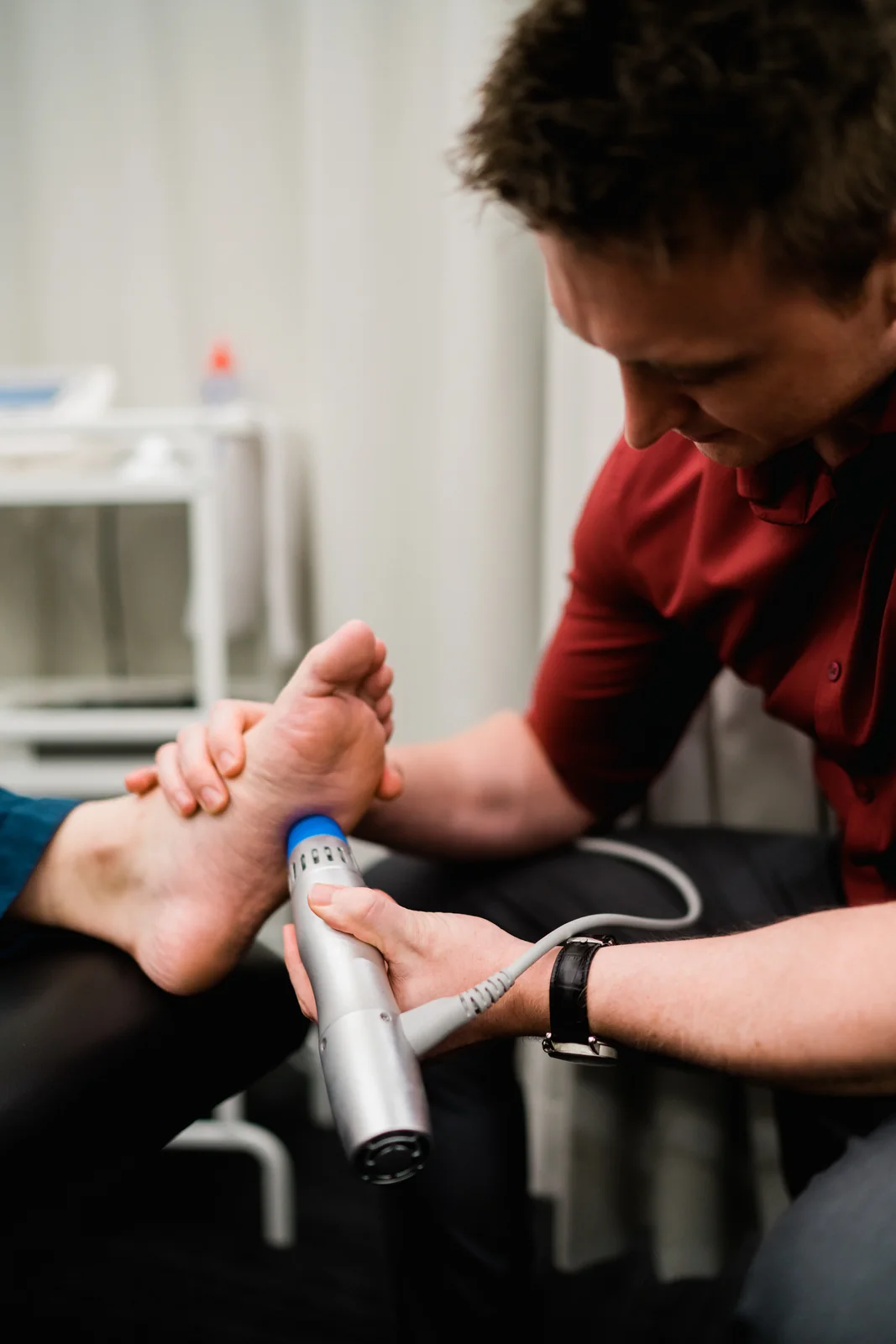
Carpal tunnel syndrome is a compression neuropathy, meaning a nerve squeezed inside a space too narrow for it. The nerve is the median nerve, and the space is the carpal tunnel at the front of the wrist. It causes numbness, tingling and pain in the thumb, index and middle fingers, usually worst at night. Most mild to moderate cases are managed without surgery.
Key takeaways
- The pattern is numbness and tingling in the thumb, index and middle fingers, worse at night and eased by shaking the hand.
- A night splint and a change in hand use help many people with mild to moderate symptoms, though the evidence is of low certainty.
- Keyboard work has not been shown to cause it, while vibration and forceful gripping carry stronger evidence.
- Constant numbness, visible thinning of the thumb muscles, or a weakening grip mean you should be assessed promptly.
What is the carpal tunnel, and what passes through it?
The carpal tunnel is a narrow passage at the front of the wrist, floored and walled by the small wrist bones and roofed by the transverse carpal ligament, a rigid band that barely stretches. Nine flexor tendons, the cords that bend the fingers and thumb, share that passage with the median nerve (American Academy of Orthopaedic Surgeons).
The median nerve gives feeling to the thumb, index and middle fingers and the thumb side of the ring finger, and controls the muscles at the base of the thumb. Swelling inside the tunnel raises pressure against a roof that does not stretch, and the nerve stops conducting normally.
Carpal tunnel symptoms, and why they wake you at night
The first symptoms are usually tingling and numbness in those fingers, coming and going at first. A weak grip and a tendency to drop things often follow (SingHealth). Wrist pain alone points less clearly to the nerve than the numbness pattern does.
Night symptoms are the most recognisable feature. Many people sleep with their wrists bent, which raises pressure inside the tunnel enough to wake them (the Academy). Shaking the hand usually eases it, because straightening the wrist lowers that pressure again.
What causes carpal tunnel syndrome?
Women and older adults are affected more often, and the tunnel is naturally smaller in some families. Repetitive hand and wrist motions that swell the tendons, prolonged extreme wrist bending, pregnancy, diabetes, rheumatoid arthritis and thyroid imbalance all appear on the risk list (the Academy).
The link with office computer work is weaker than most people assume. A systematic review of eight epidemiological studies found insufficient epidemiological evidence that computer work causes carpal tunnel syndrome (Thomsen, Gerr and Atroshi, 2008). Hand-arm vibration, and repetitive hand use combined with force, carry accepted evidence instead. Someone who grips, twists and uses vibrating tools is at higher risk than someone who types.
Conditions that are mistaken for carpal tunnel syndrome
Nerve compression in the neck can also produce numbness and tingling in the hand, and the two are confused frequently. Carpal tunnel symptoms stay within the median nerve's territory and are worst at night, which is the most useful clue without testing.
SingHealth notes that sudden weakness, loss of grip, or numbness with severe neck pain or shooting arm pain may point to a different neurological problem needing prompt evaluation. Where the neck is the source, treatment is directed there, as our page on neck pain treatment sets out.
What you can do yourself, and the signs that mean you should not wait
Two measures have the most support: a splint worn at night, and a change in what the hand is asked to do. The splint holds the wrist straight while you sleep, and the NHS advises that it may take up to six weeks before you feel better (NHS).
A Cochrane review of 29 trials in 1,937 people found that splints may offer little or no benefit in the first three months, on low-certainty evidence (Karjalainen and colleagues, 2023). One small trial did find night splinting better than no treatment. The reviewers judged splints inexpensive and low-risk, so a small benefit is still worth having.
Alongside the splint, reduce the exposures that carry real evidence: hard repetitive gripping, long periods with the wrist bent, and vibrating tools. Frequent breaks and a neutral wrist position are among SingHealth's prevention measures.
Three findings mean assessment should come before any more waiting: constant rather than intermittent numbness, visible thinning of the muscles at the base of the thumb, and weakness when gripping. All three suggest the nerve has been damaged, and conservative care alone is not the right plan then.
How carpal tunnel syndrome is assessed and treated without surgery
Assessment begins with clinical history and physical examination. A clinician asks which fingers are affected and what the night pattern is, then examines the wrist, forearm and neck, because hand symptoms are not always a wrist problem.
Where the picture needs confirming, a nerve conduction study is the standard test, and SingHealth describes it as taking roughly 30 to 45 minutes without anaesthesia. It also shows how far the nerve has been affected, which decides whether conservative care is still appropriate.
Conservative carpal tunnel treatment here is non-invasive and drug-free, and works on the structures around the nerve. Hands-on myofascial release addresses tightness in the forearm flexor muscles and at the wrist. Nerve and tendon gliding exercises are taught within a programme of rehabilitative exercises, and both the Academy and SingHealth call them potentially helpful in mild to moderate cases. Where the neck contributes, chiropractic treatment addresses that part.
It matters as much to say what we do not claim. A Cochrane review of 22 trials found no data supporting a clinical effect of low-level laser therapy in carpal tunnel syndrome (Rankin and colleagues, 2017). We therefore do not offer it for this condition. Corticosteroid injection sits with medical care, and its relief is usually temporary.
When to seek a surgical opinion
Surgical release divides the transverse carpal ligament to make more room for the nerve. SingHealth states that surgery may be advised in moderate or advanced cases with significant nerve damage, or where conservative care fails. The Academy adds that long-standing cases with constant numbness and thumb-muscle wasting may be considered for surgery to prevent irreversible damage.
A Cochrane review of 14 trials in 1,231 people found that at six to twelve months surgery probably produced about twice as many people reporting improvement as splinting did (Lusa and colleagues, 2024). Differences in symptoms, hand function and quality of life were small, and the reviewers judged surgery's benefits real but modest.
Someone with mild or moderate symptoms who has not tried conservative care has good reason to start there. Someone with nerve damage on testing, or visible thumb-muscle wasting, should be having a surgical conversation now. We will tell you which group you are in.
Speak to the Team at Elite Spine Centres
If numbness, tingling or wrist pain is waking you at night or weakening your grip, the first step is establishing how much pressure the nerve is under. Our clinicians will take a full history, examine the wrist, forearm and neck, and set out a personalised, non-invasive nerve compression treatment plan where conservative care is appropriate. Where it is not, we will refer you on. To book a consultation, call +65 6904 8400 or message us on WhatsApp at +65 9727 3603.
Frequently Asked Questions
What are the treatment options for carpal tunnel syndrome?
They fall into three groups: self-management with a night splint and activity change, clinic-based conservative care such as manual therapy and nerve gliding exercises, and medical options including injection and surgery. Which fits depends on how far the compression has progressed.
Can carpal tunnel syndrome go away on its own?
It can. The NHS notes that the condition can take months to improve, and that it sometimes resolves within a few months where pregnancy is the cause. Numbness that has already become constant is unlikely to settle without treatment.
What are the main signs of carpal tunnel syndrome?
The main signs are numbness and tingling in the thumb, index and middle fingers, worse at night and often eased by shaking the hand. A weakening grip is common, and pain may spread into the wrist and forearm.
How do you test for carpal tunnel at home?
There is no reliable home test. Tinel's sign and Phalen's test are used during a clinical examination, and neither is dependable on its own. A nerve conduction study is what confirms the diagnosis.
Does typing at a computer cause carpal tunnel syndrome?
The evidence does not support it. A systematic review of eight epidemiological studies found insufficient epidemiological evidence that computer work causes carpal tunnel syndrome. Vibration, and repetitive hand use combined with force, carry stronger evidence.
Sources
- American Academy of Orthopaedic Surgeons. Carpal Tunnel Syndrome, OrthoInfo. orthoinfo.org
- NHS. Carpal tunnel syndrome. nhs.uk
- SingHealth. Carpal Tunnel Syndrome. singhealth.com.sg
- Thomsen JF, Gerr F, Atroshi I. Carpal tunnel syndrome and the use of computer mouse and keyboard: a systematic review. BMC Musculoskeletal Disorders 2008;9:134. pmc.ncbi.nlm.nih.gov
- Karjalainen TV, Lusa V, Page MJ, O'Connor D, Massy-Westropp N, Peters SE. Splinting for carpal tunnel syndrome. Cochrane Database of Systematic Reviews 2023, Issue 2, CD010003. cochrane.org
- Lusa V, Karjalainen TV, Pääkkönen M, Rajamäki TJ, Jaatinen K. Surgical versus non-surgical treatment for carpal tunnel syndrome. Cochrane Database of Systematic Reviews 2024, Issue 1, CD001552. cochrane.org
- Rankin IA, Sargeant H, Rehman H, Gurusamy KS. Low-level laser therapy for carpal tunnel syndrome. Cochrane Database of Systematic Reviews 2017, Issue 8, CD012765. cochrane.org
This article is for general information and does not replace a diagnosis from a qualified healthcare professional. Please consult a qualified practitioner about your individual situation.
Speak to a clinician about what is causing your pain.
Your first visit is a 60-minute session with a doctor — a full assessment and your first treatment in the same appointment. We take your clinical history, screen your posture and movement, explain what we find in plain language, and begin treatment if your condition is suitable for our care.